
Craft
Watchmaking
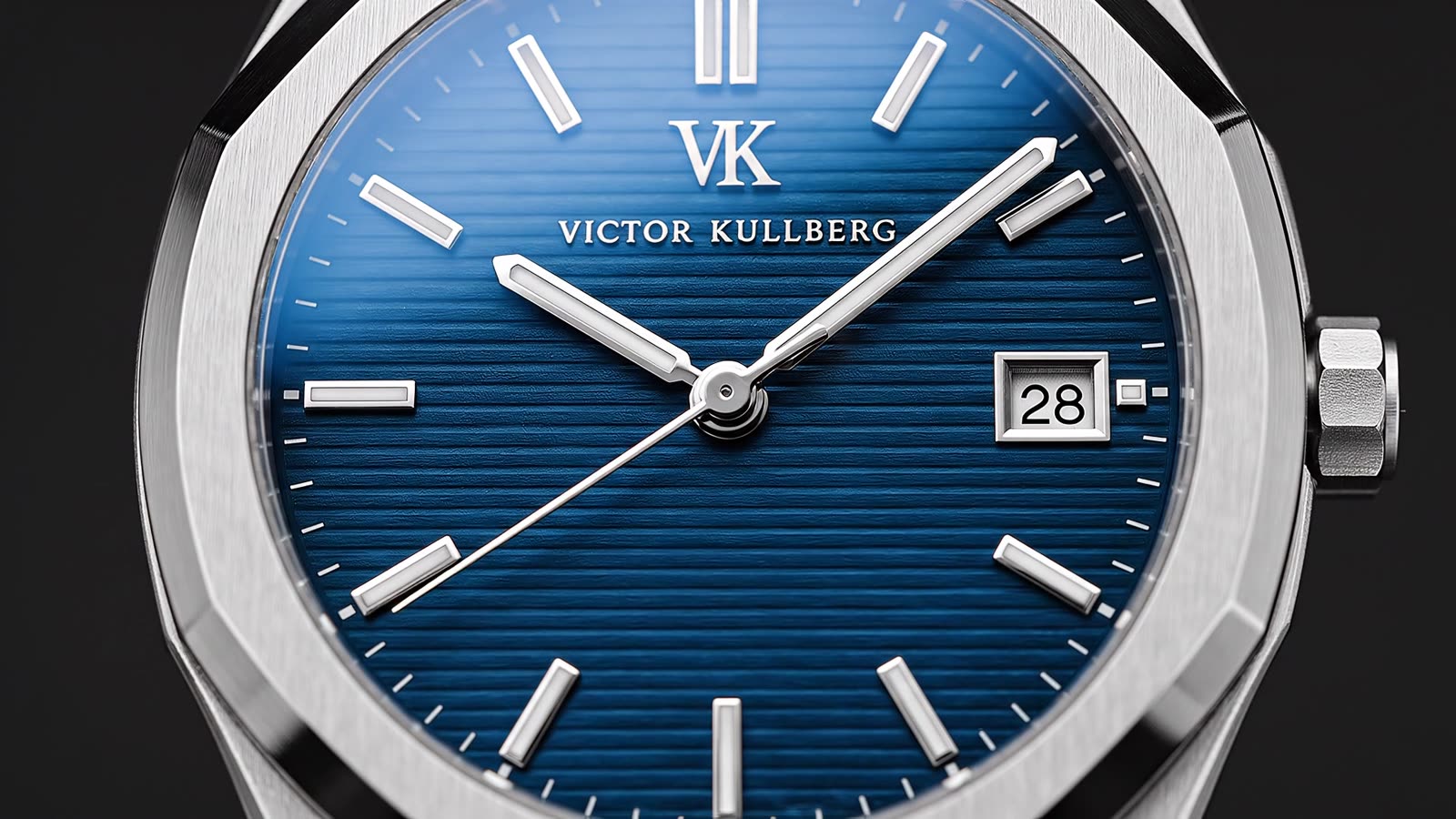
A quartz movement keeps the time. Around it: a 316L stainless steel case, sapphire crystal, and a dial made to be read at a glance.
The case
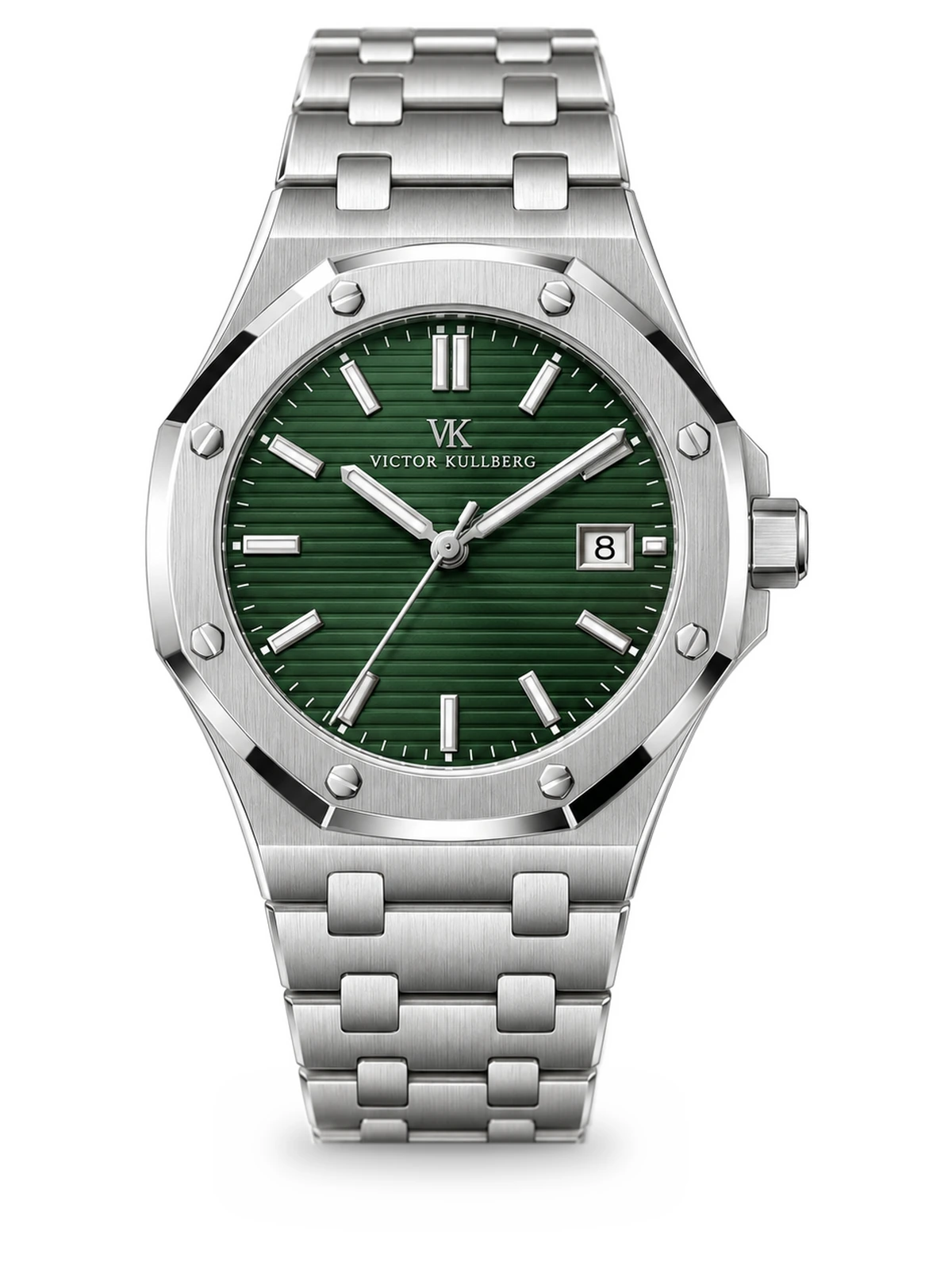
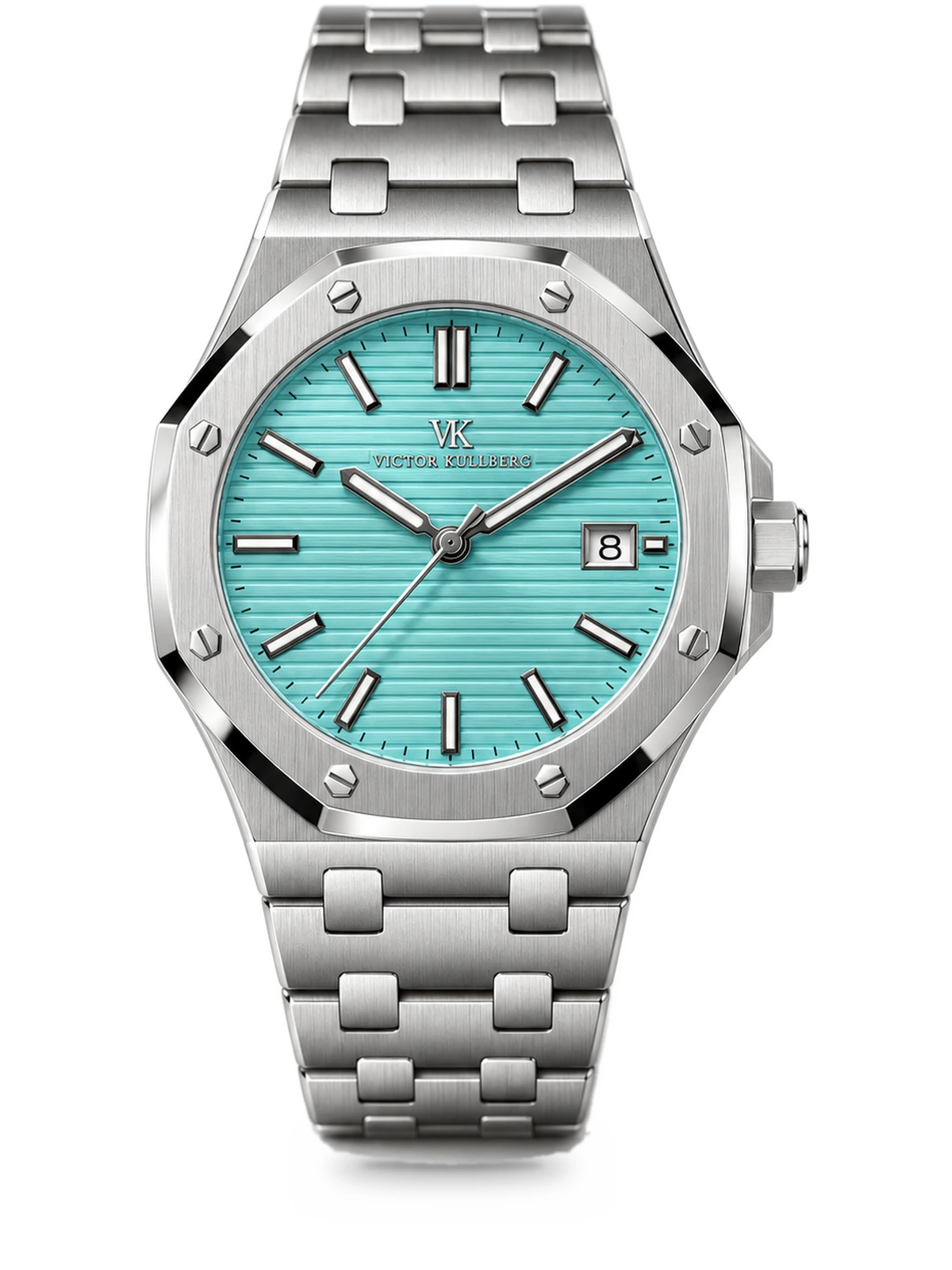
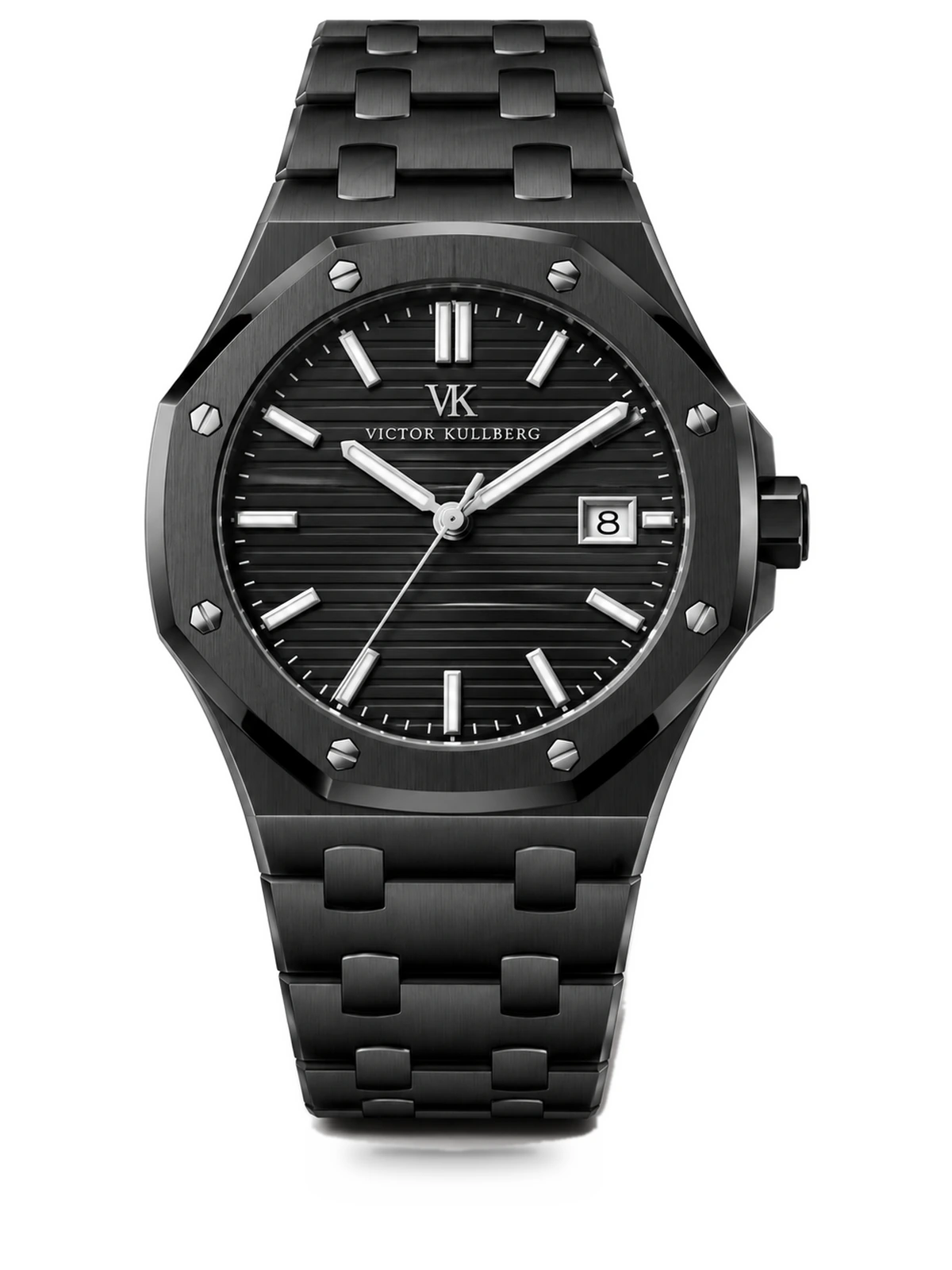
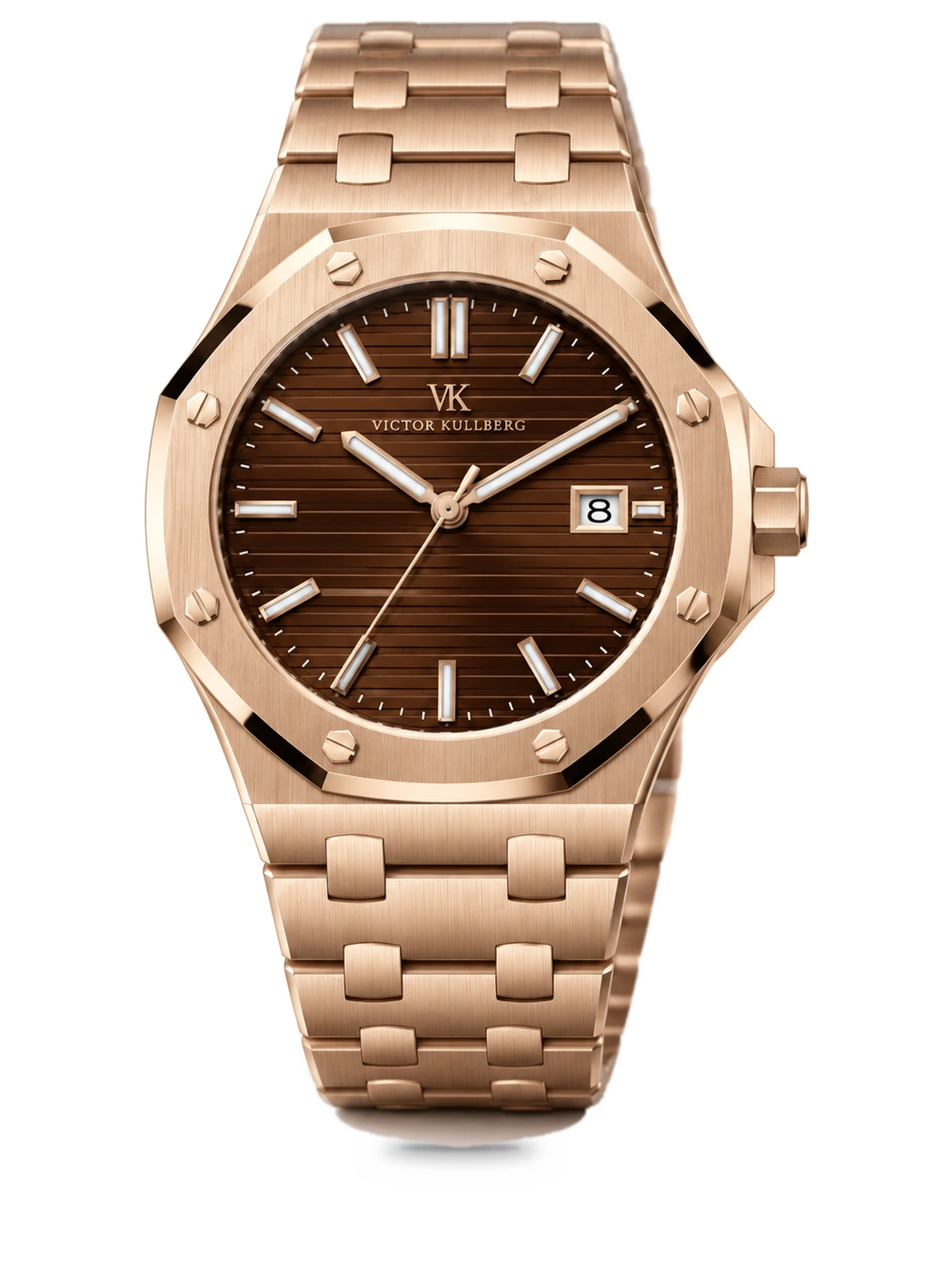
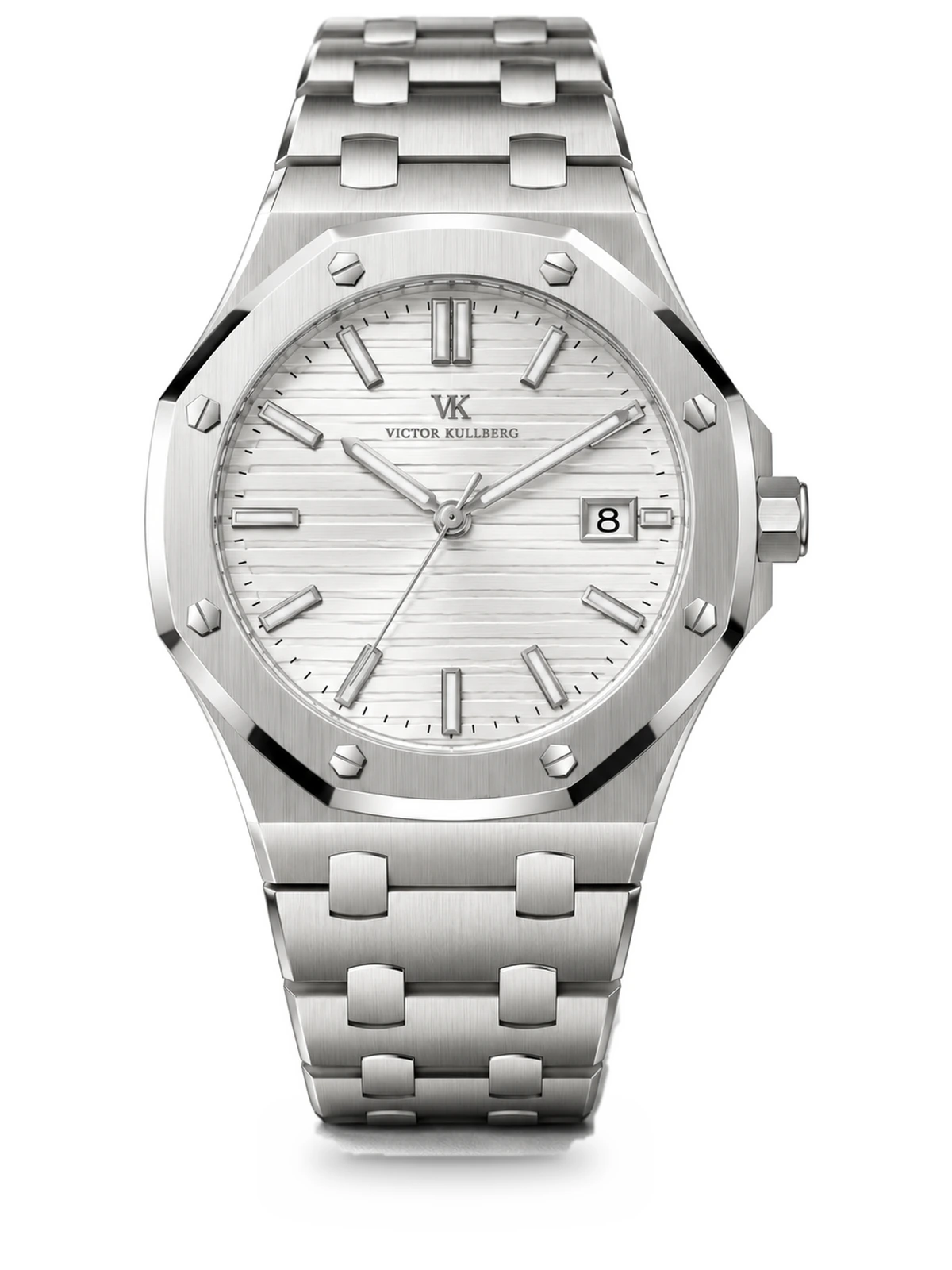
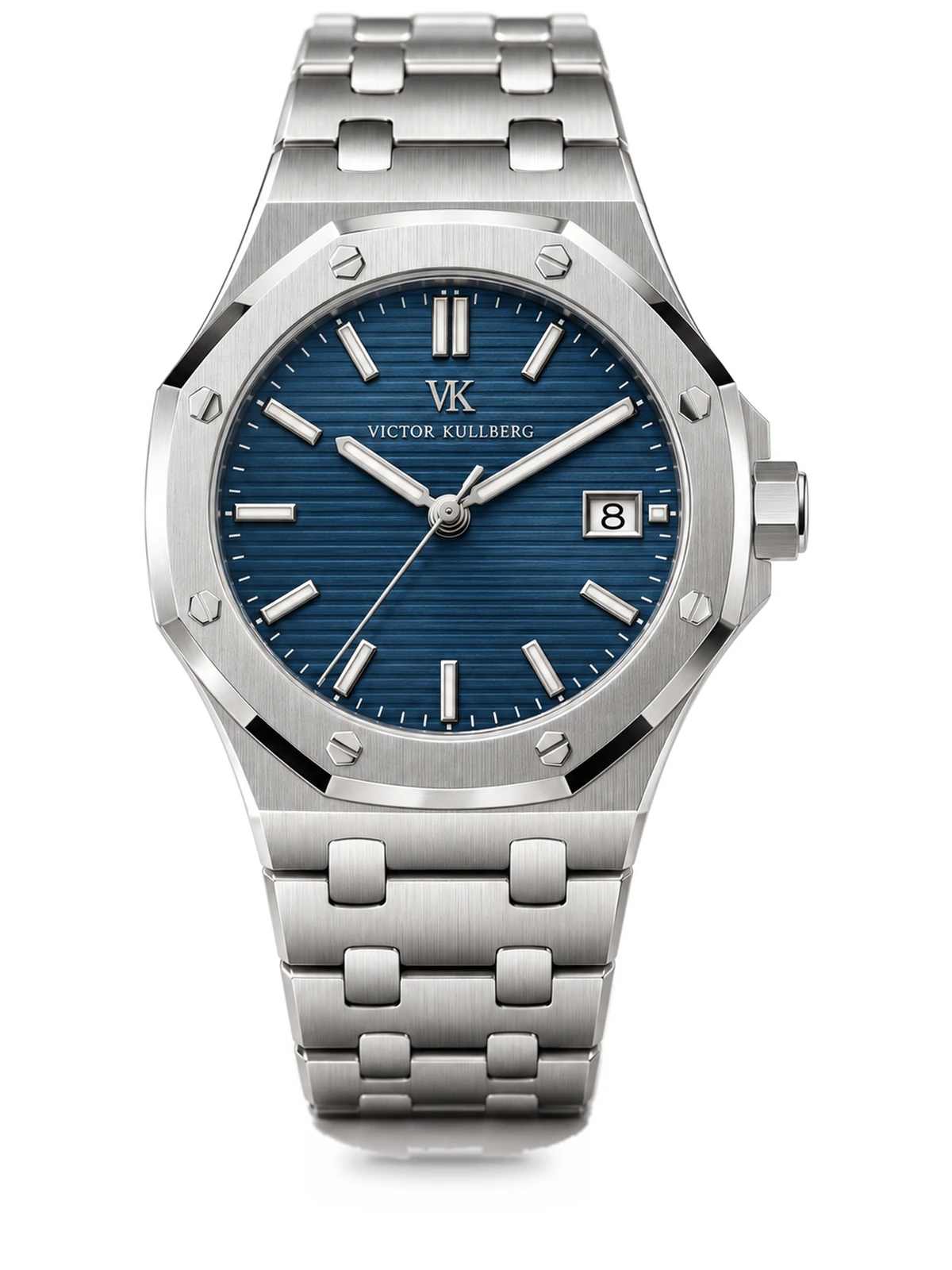
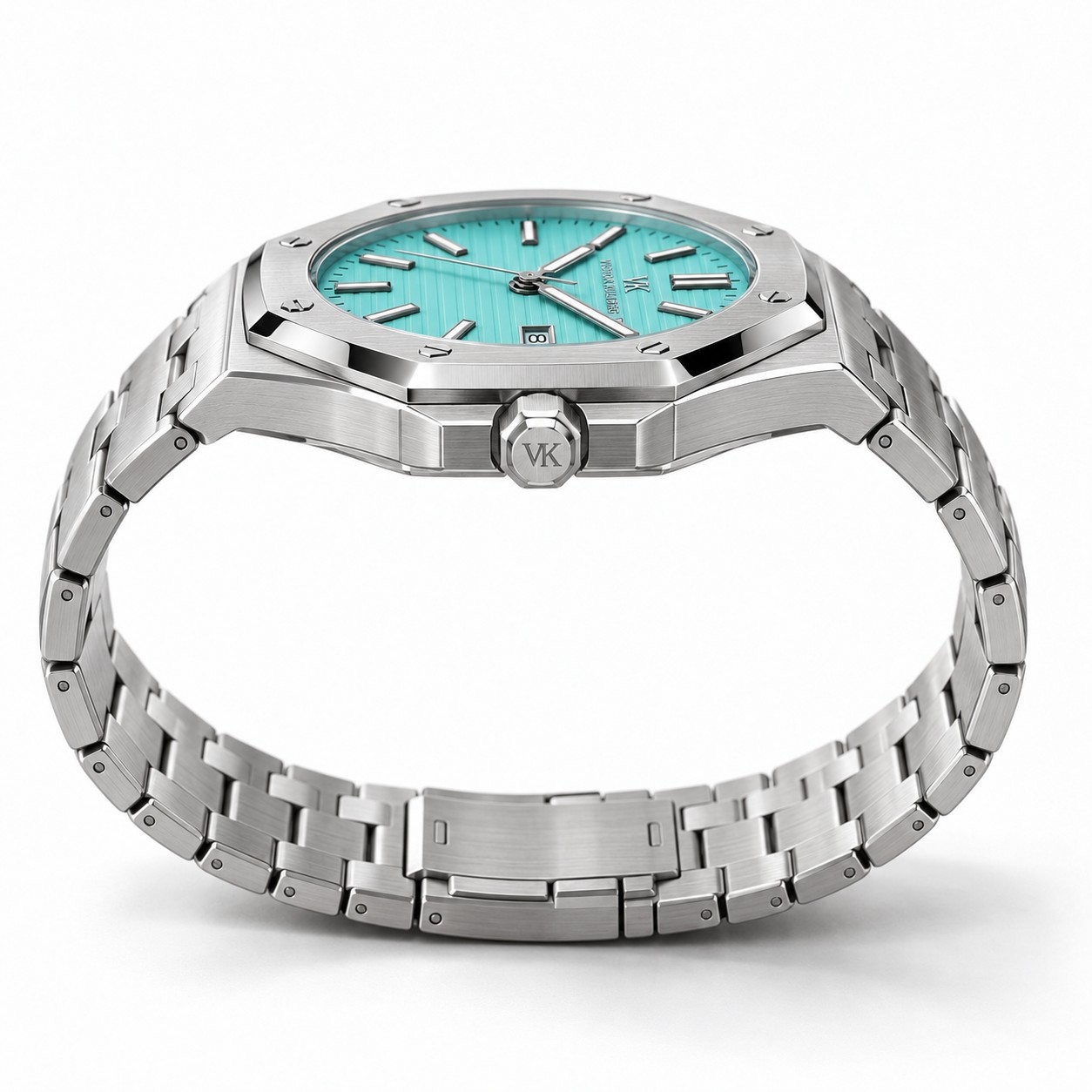
316L stainless steel, from 9 mm thin on Solstice to 12.5 mm on Longitude. Brushed surfaces meet polished bevels at sharp edges, and the bracelet runs on from the case in the same steel.
The movement
Every watch runs on a quartz movement. It keeps time whether it is worn or not, and asks for nothing but a new battery every few years. It sits in a 316L stainless steel case, under sapphire crystal.
The dial
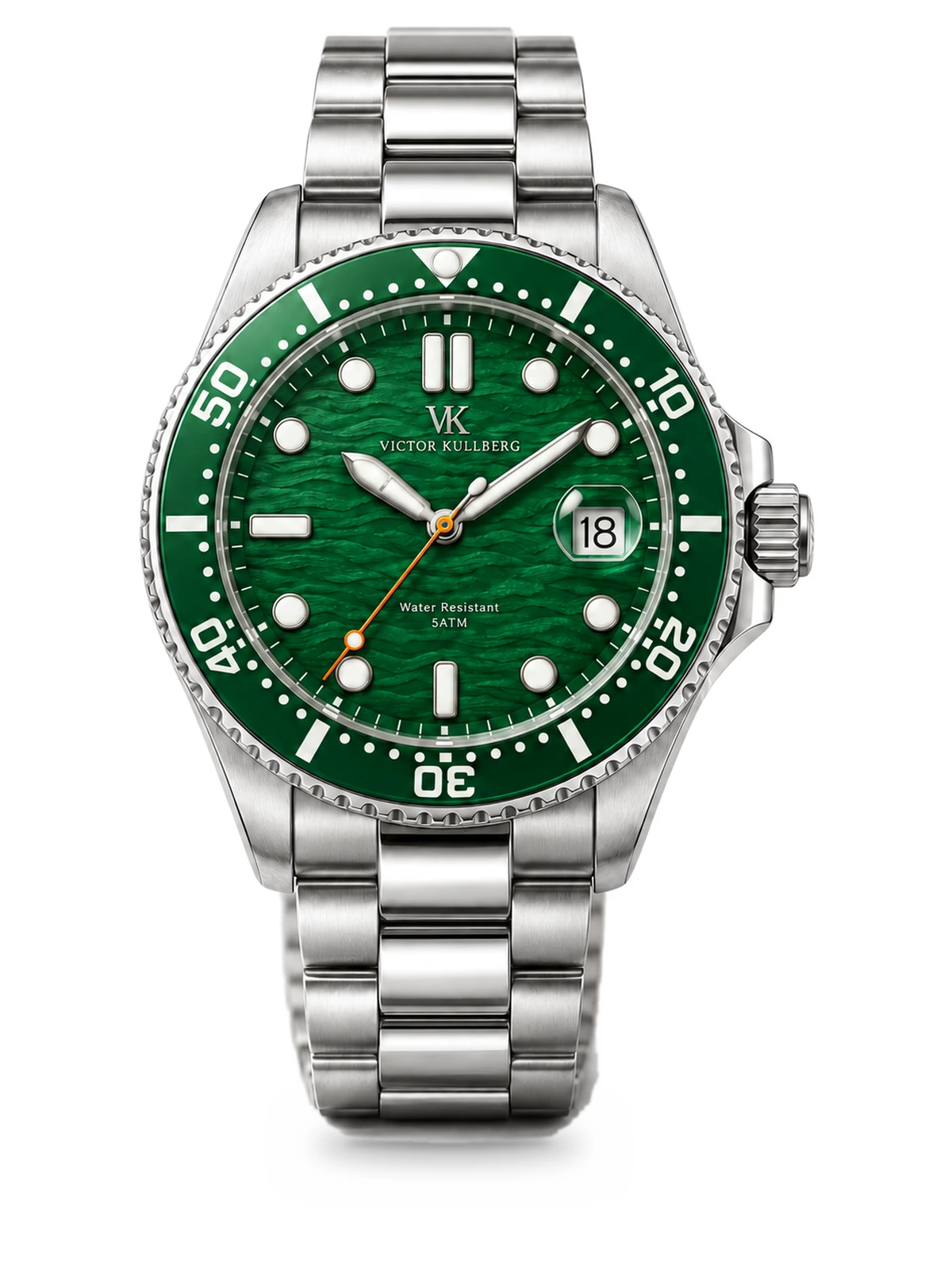
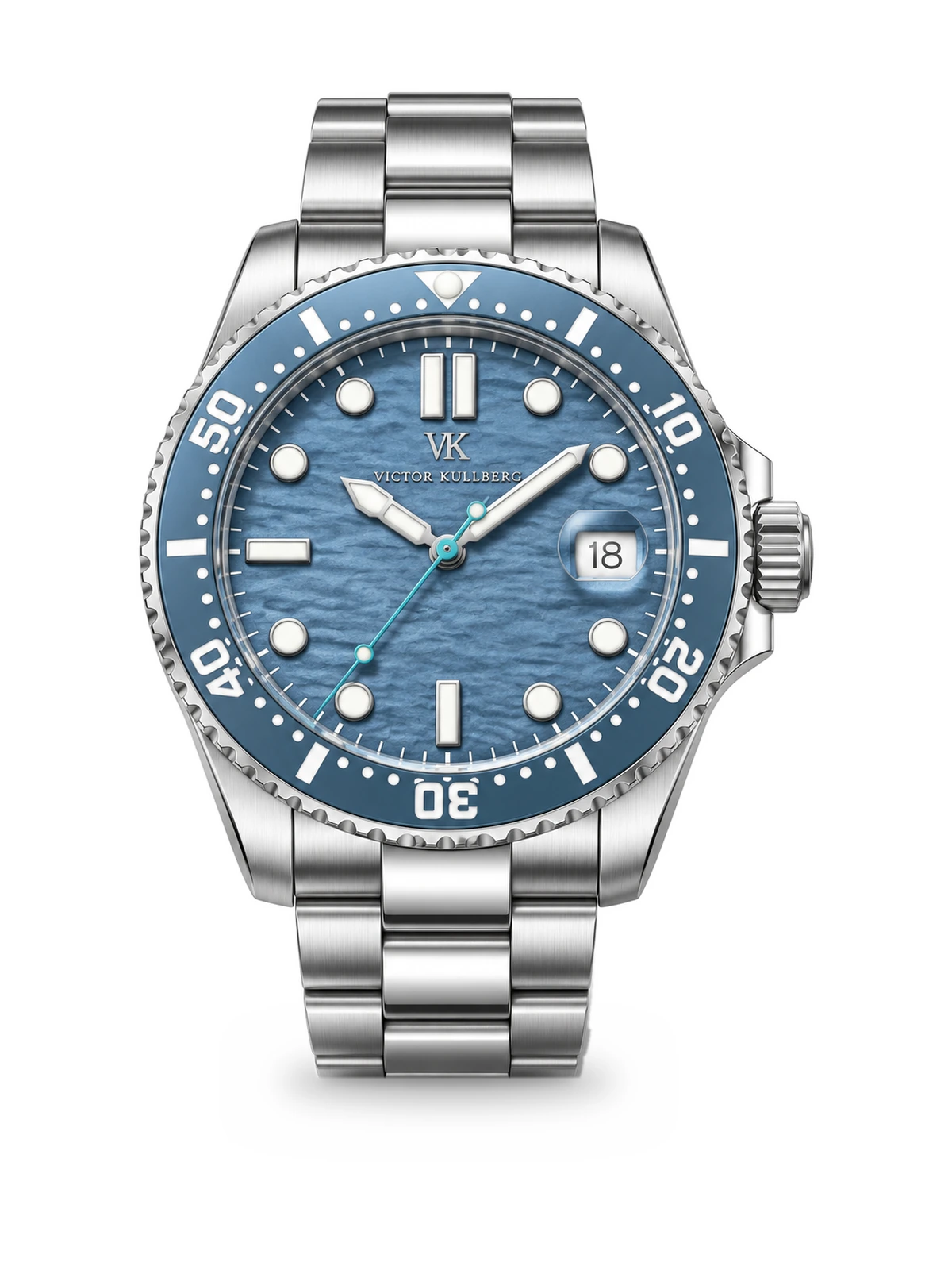
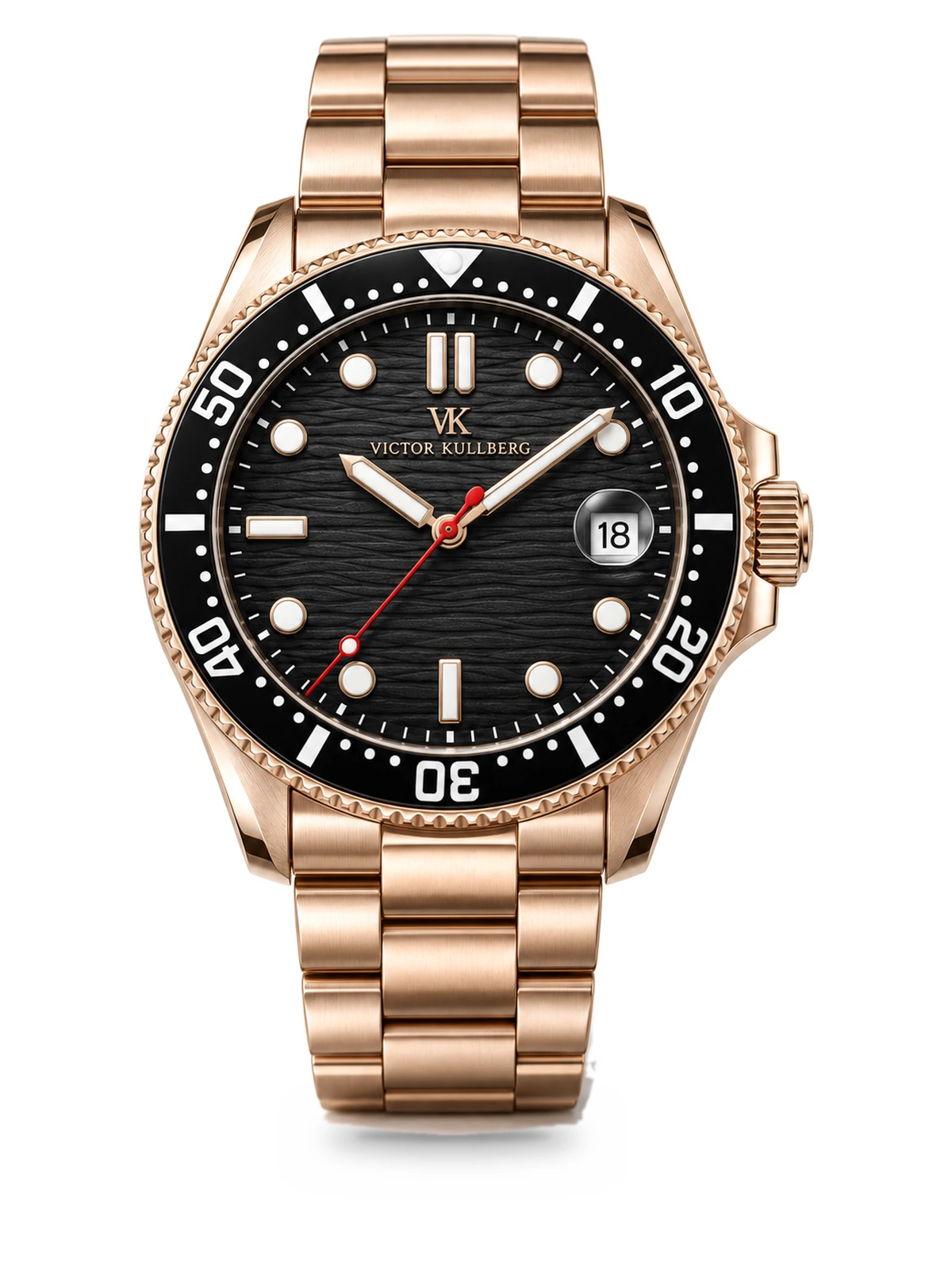
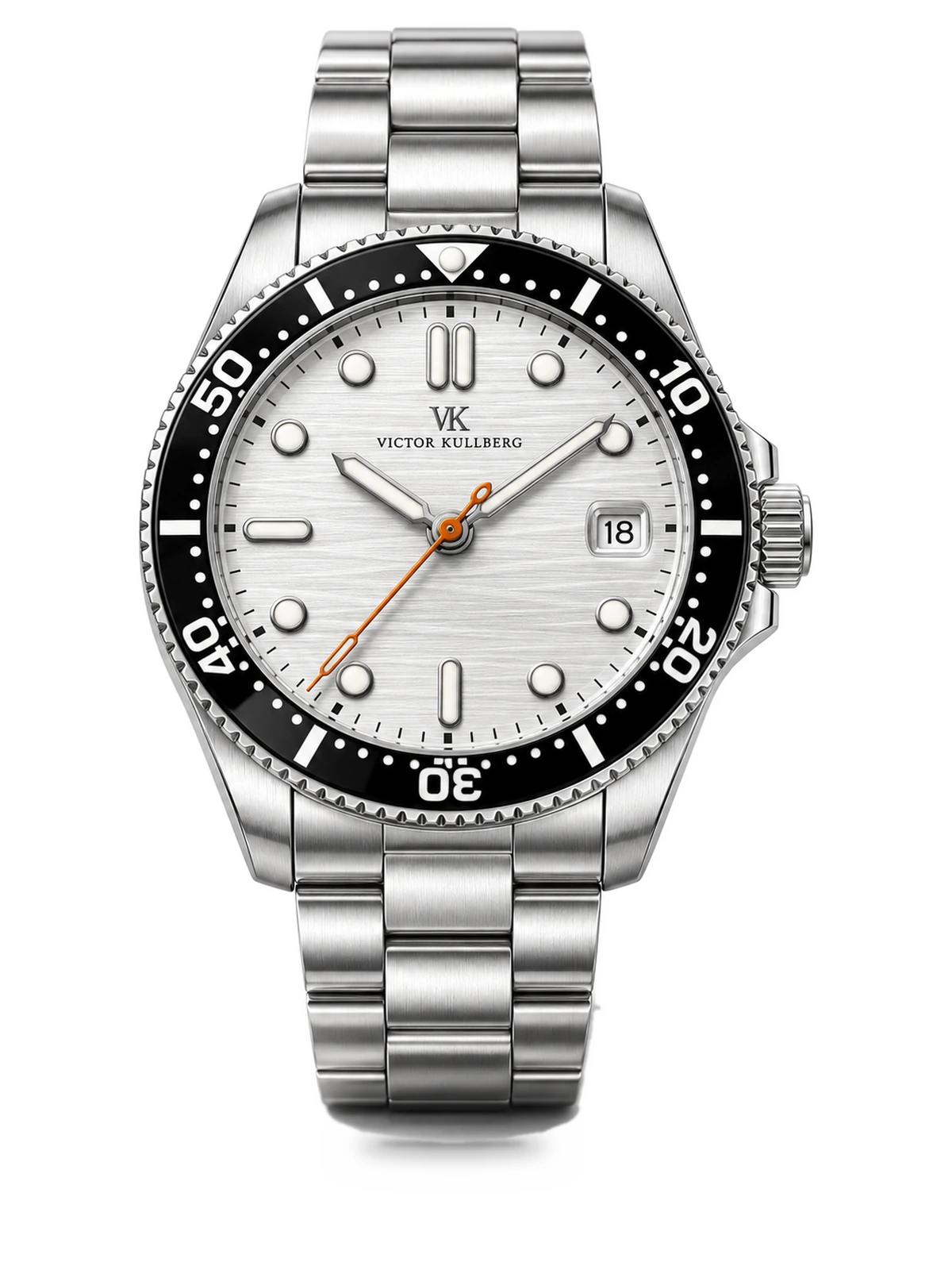
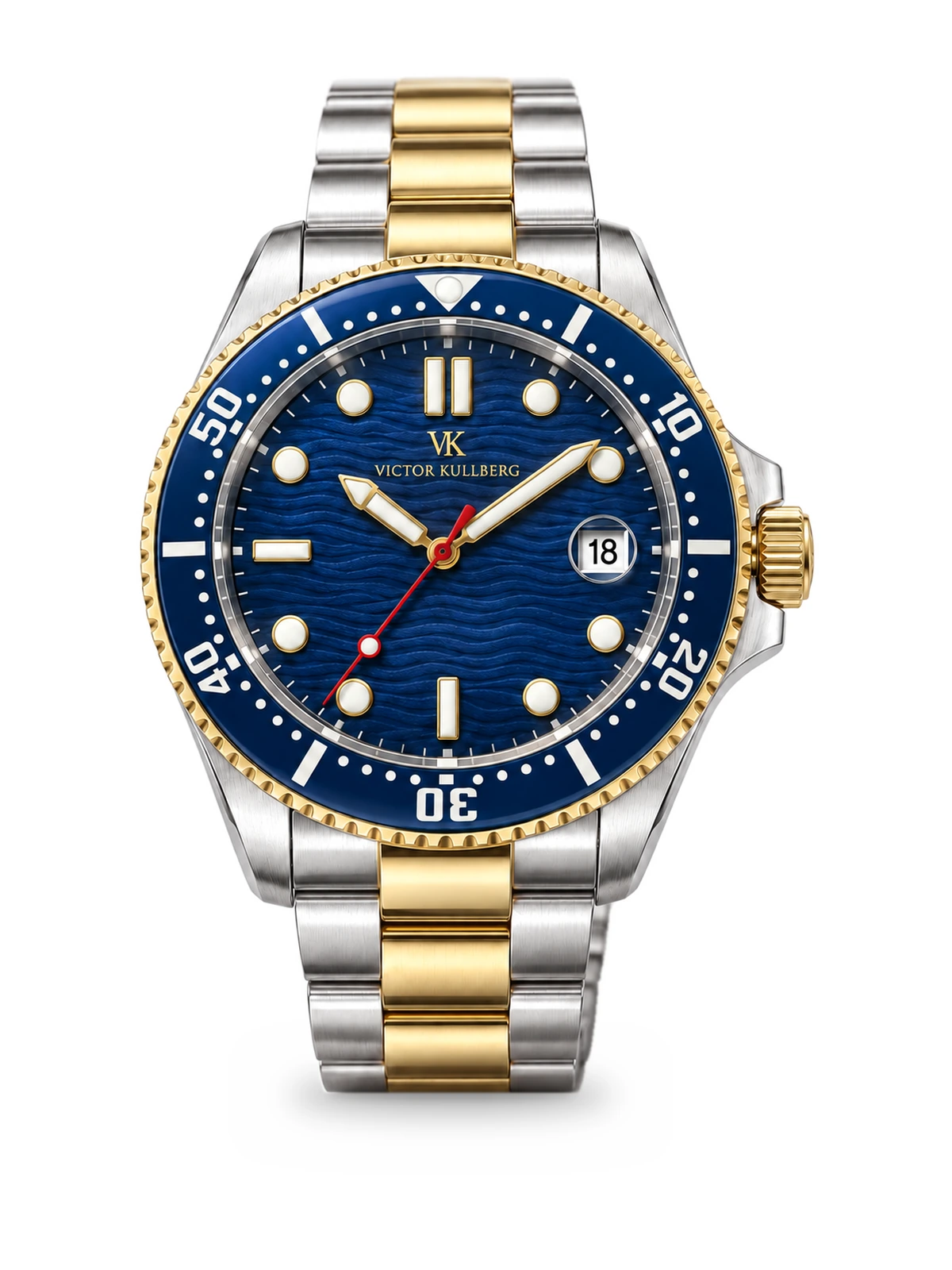
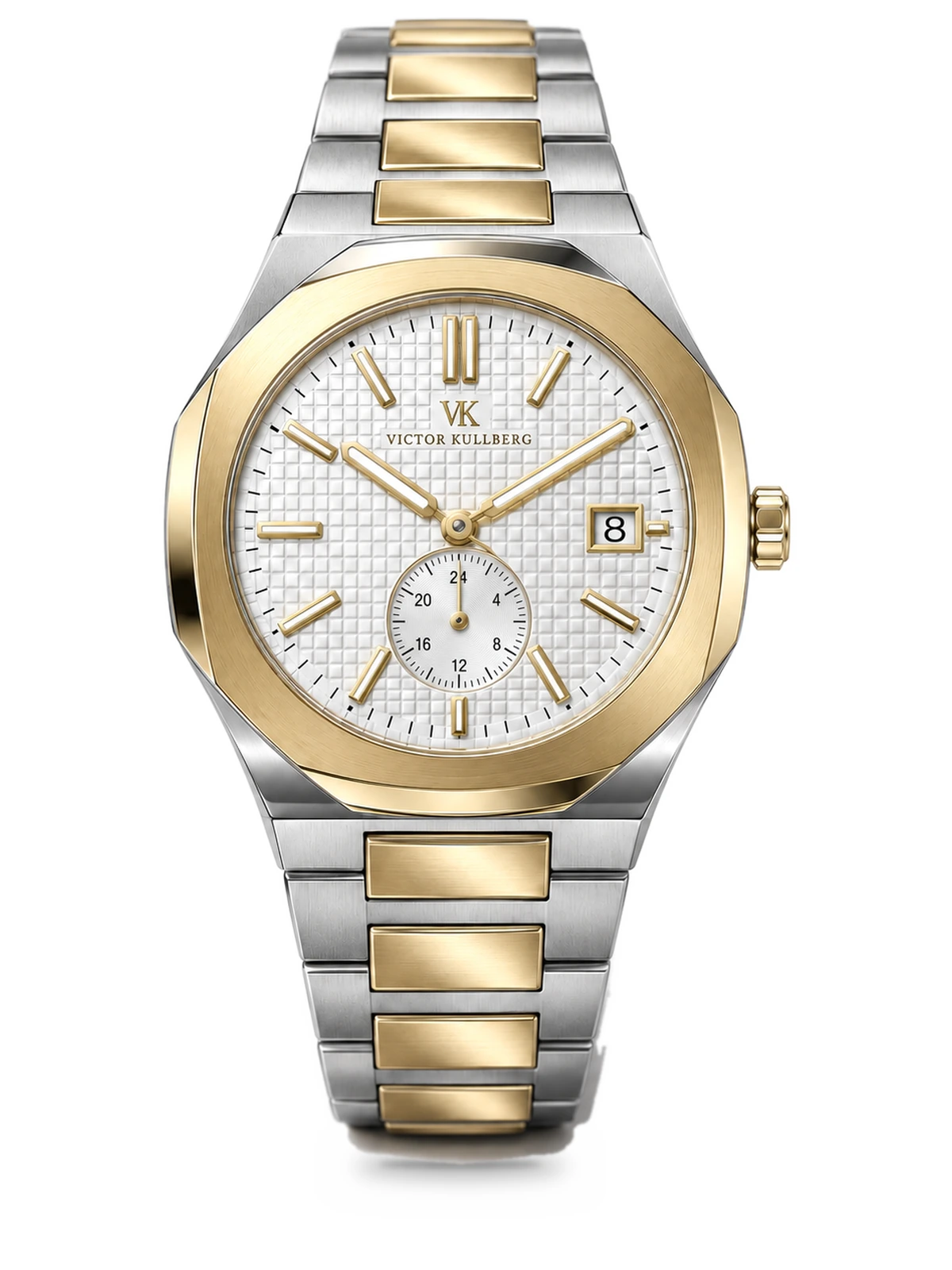
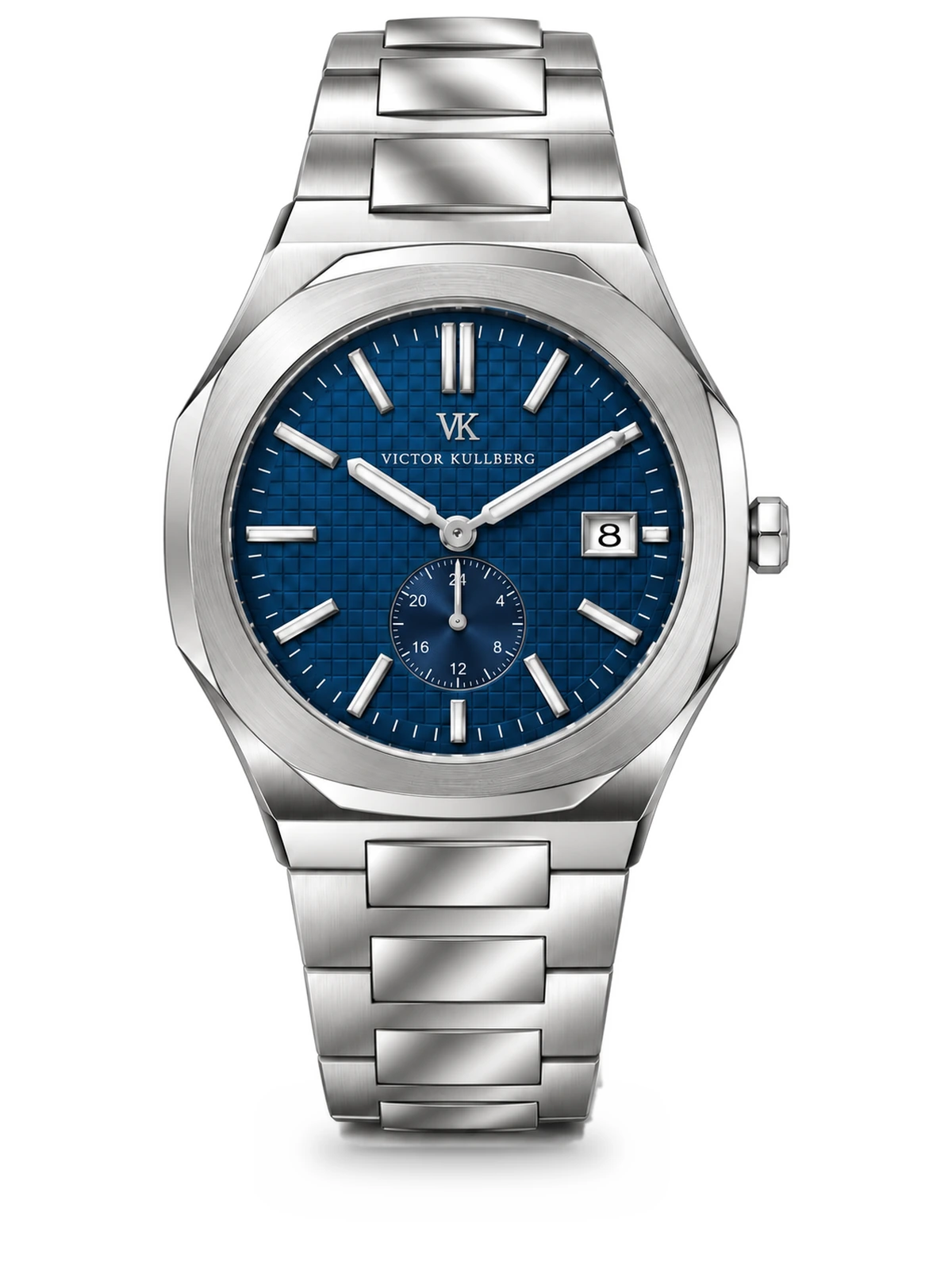
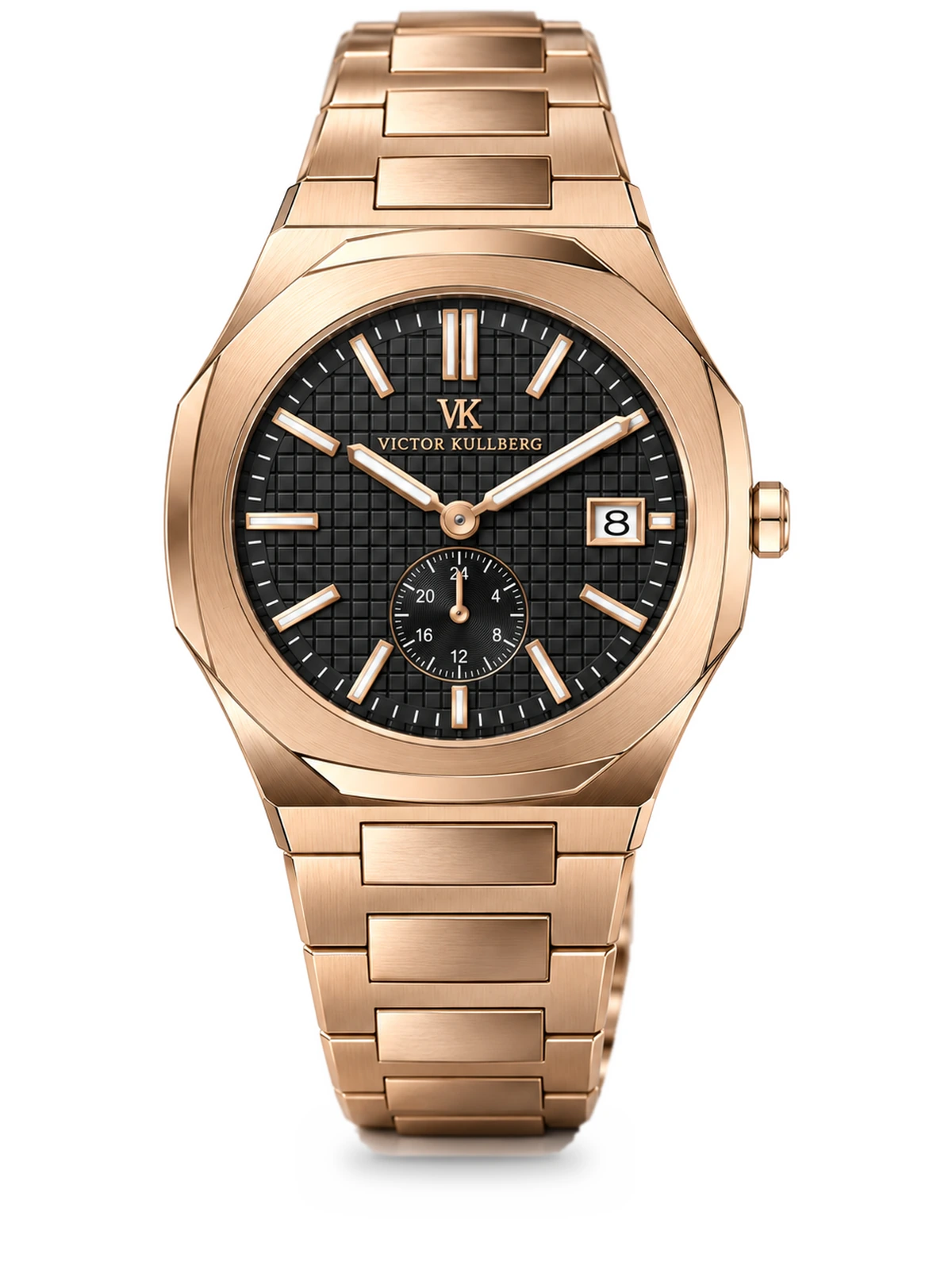
Each collection has its own texture: horizontal ribbing on Meridian, a wave pattern on Longitude, a fine square grid on Solstice. Applied indices and a date at three on all three.
From the drawing board
Three watches,
in elevation
The front of each design, drawn out. The numbers mark what each one is built around.
 1234
1234- Eight-sided bezel, held by eight screws
- Dial ribbed in horizontal lines
- Date framed at three
- Bracelet drawn from the case without a break
 1234
1234- Luminous pip at twelve
- Uni-directional timing bezel
- Dial textured like water under wind
- Date at three
 1234
1234- Softened octagonal case
- Dial cut in a fine square grid
- 24-hour register at six
- Date framed at three
In detail
Case, dial,
bracelet
The standard
What every reference
receives
- Movement
- Quartz, timed by a crystal that vibrates 32,768 times a second. Nothing to wind; a new battery every few years.
- Crystal
- Scratch-resistant sapphire over every dial, so the face stays clear through years of wear.
- Water resistance
- 10 ATM, or 100 metres, for Meridian and Solstice. 20 ATM, or 200 metres, for Longitude.
- Case
- 316L stainless steel. 42 mm for Meridian, 40.6 mm for Longitude, 40 mm for Solstice.
- Bezel
- Fixed steel on Meridian and Solstice. Uni-directional on Longitude, for timing anything up to an hour.
- Service
- A new battery every few years, with the case seals checked at the same time to keep the water resistance.
“Read at a glance. Worn every day.”