
Victor Kullberg
Discover the collectionsThe Collections
Three watches, one standard of finish.
An integrated steel watch for every day, a watch for open water, and a dress watch with a 24-hour register. Each is offered in a short run of dials, on its own bracelet.
Up close
Read at
a glance
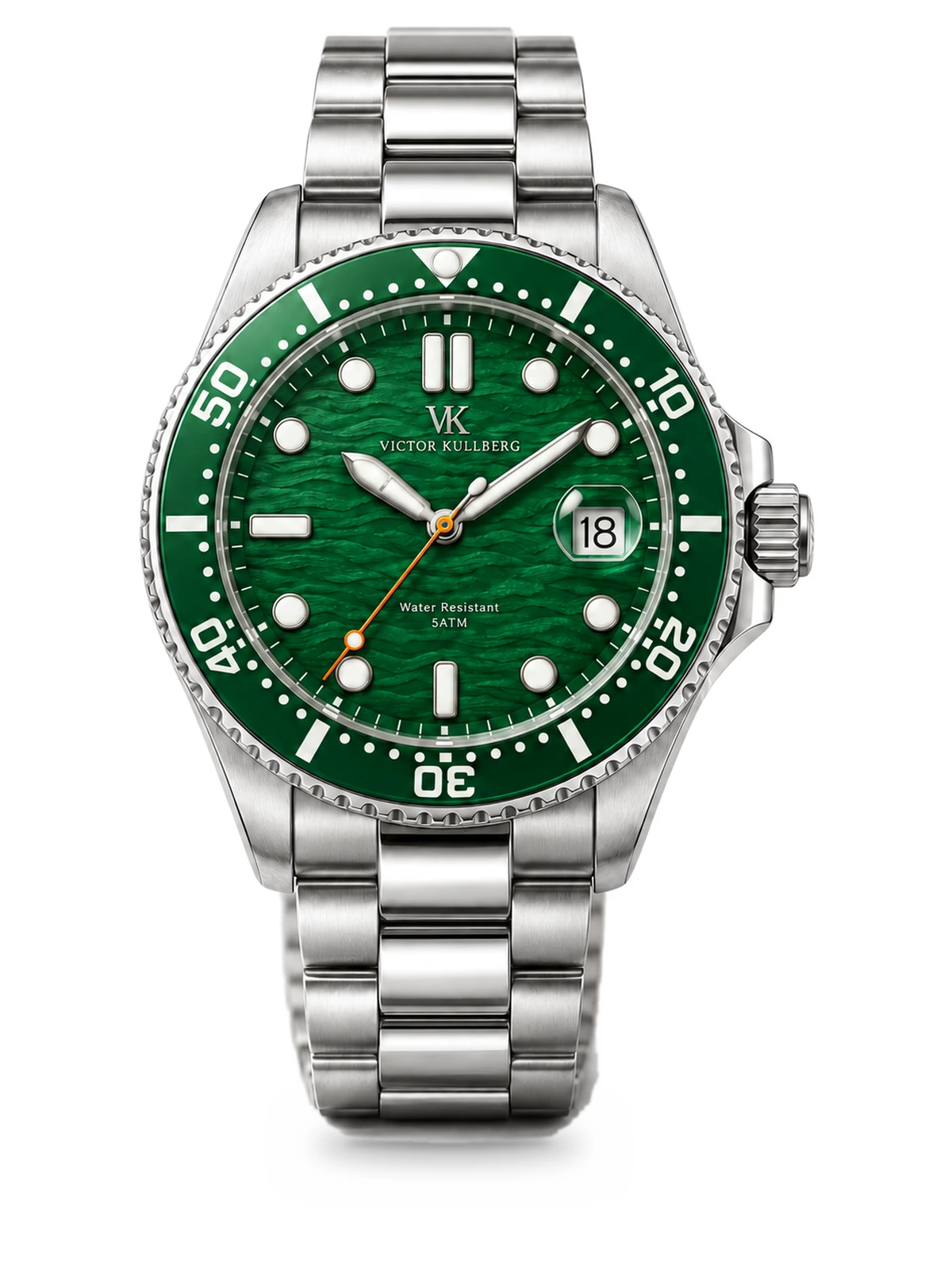
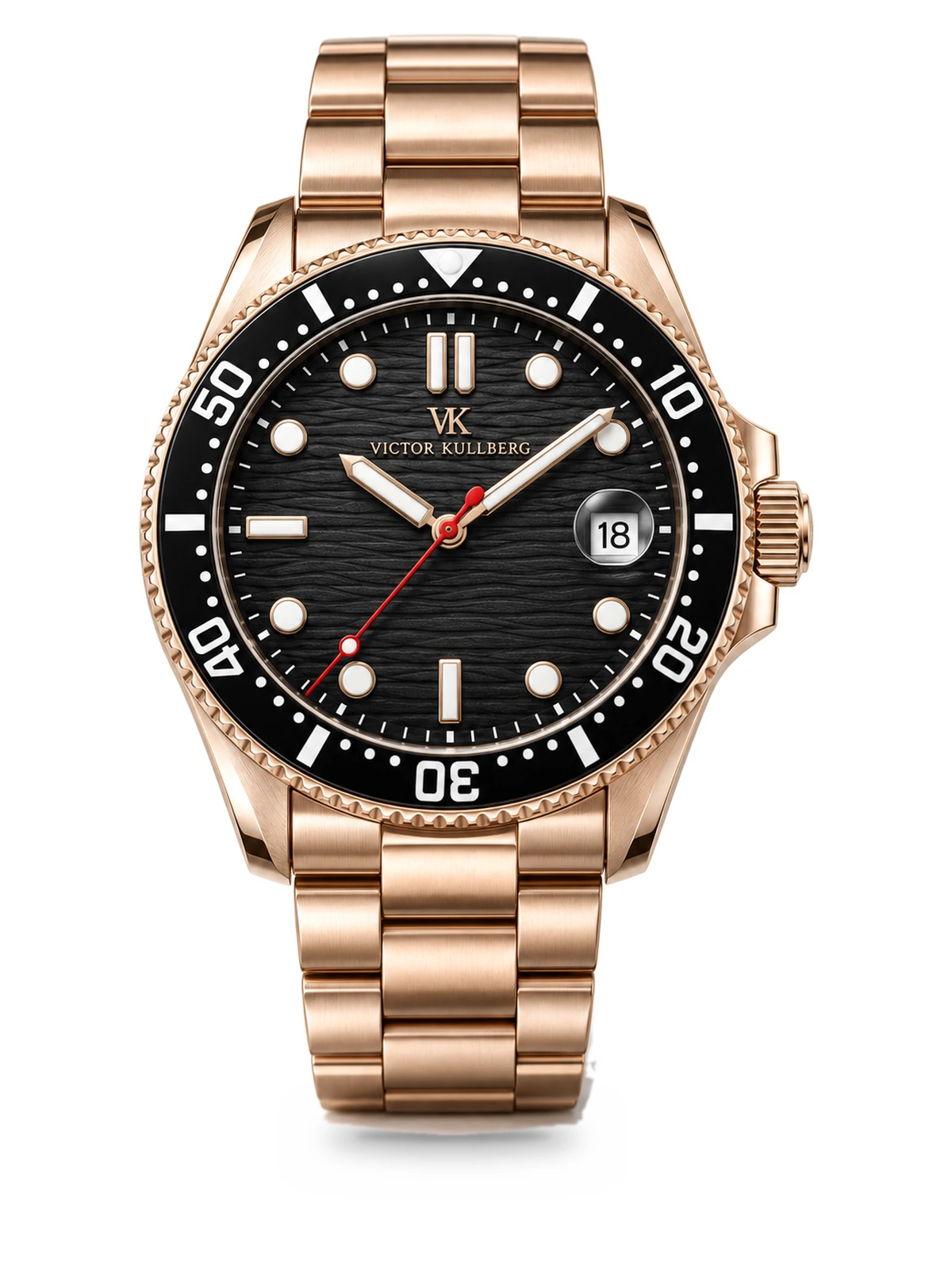
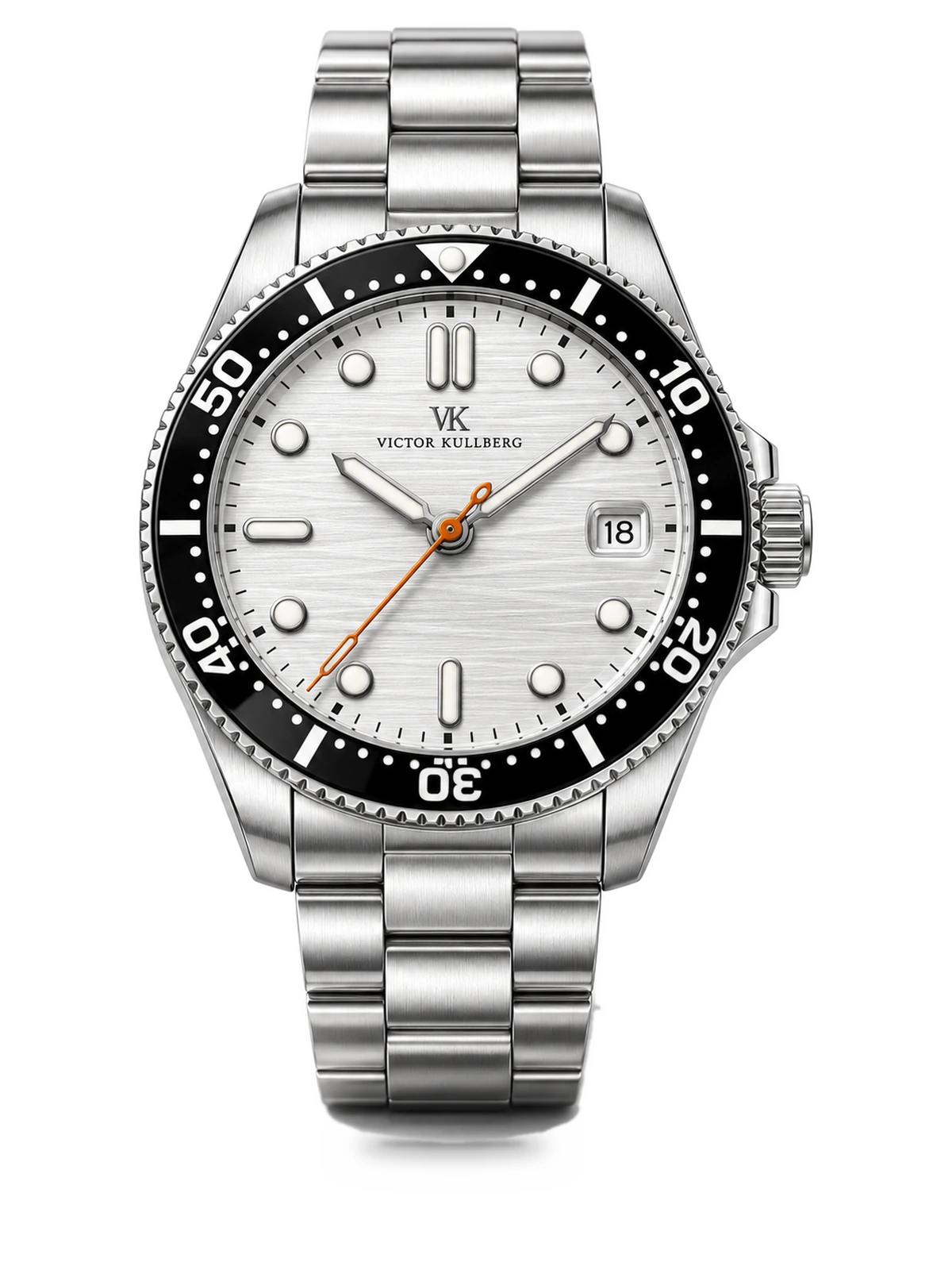
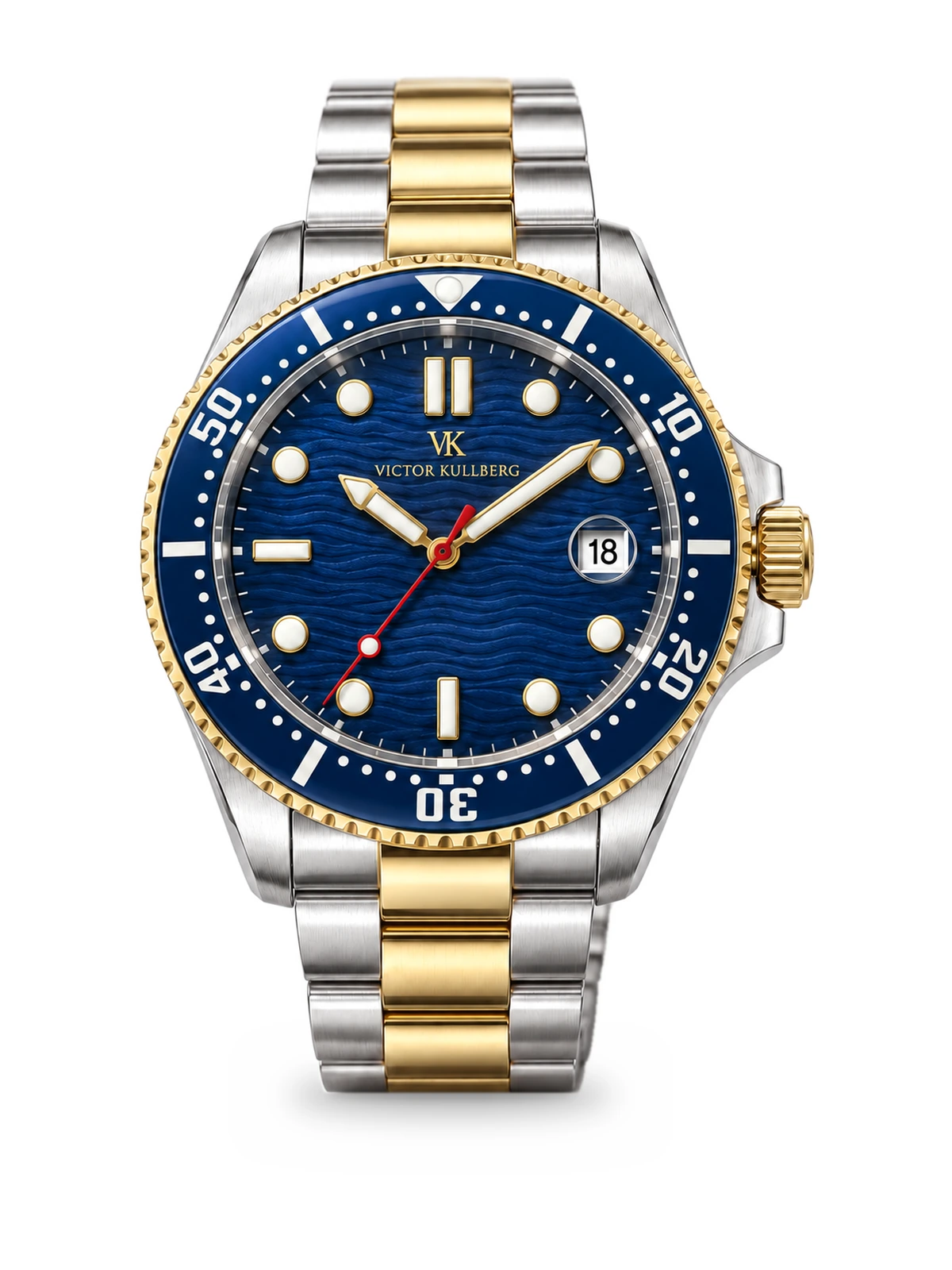
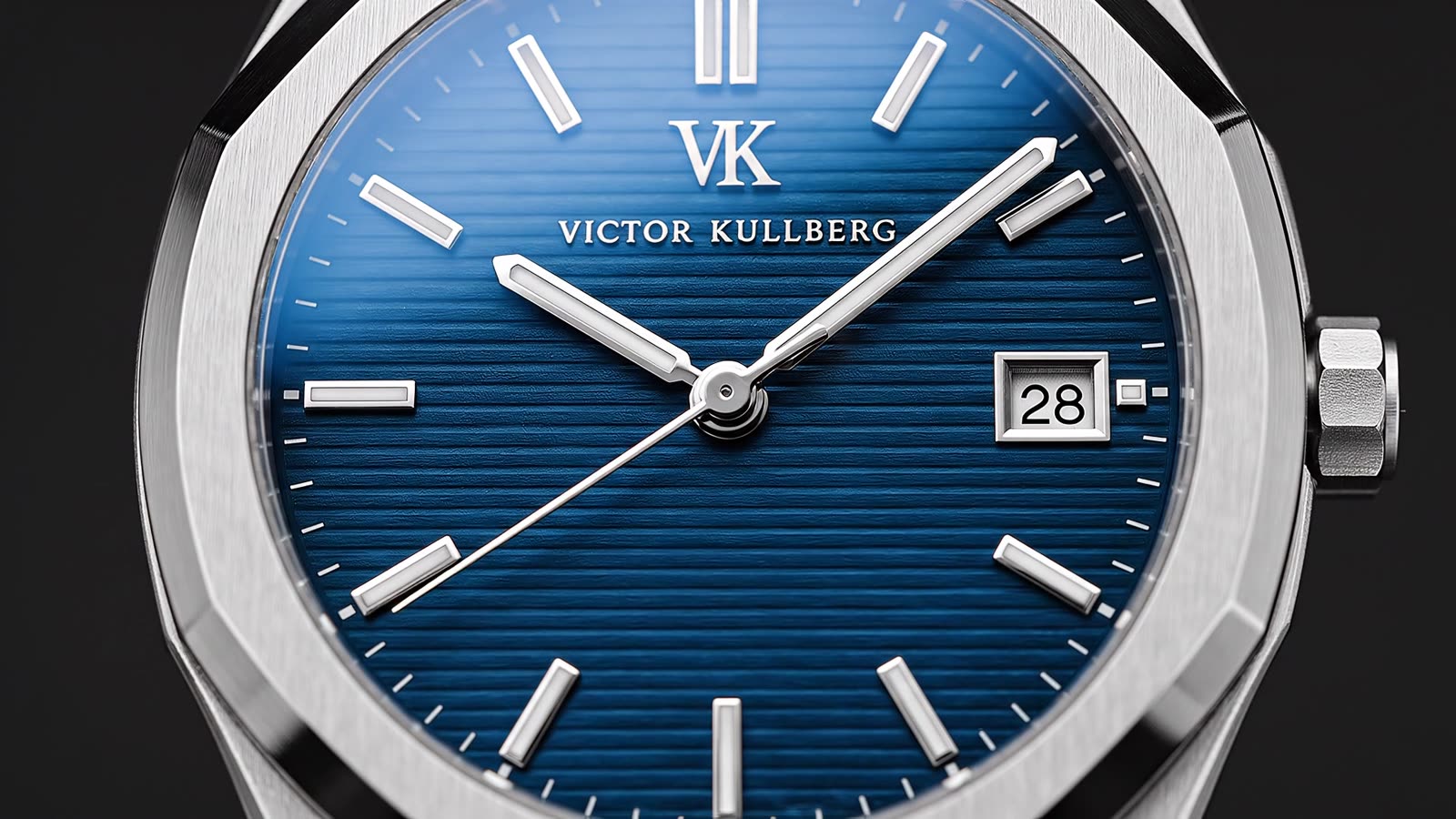
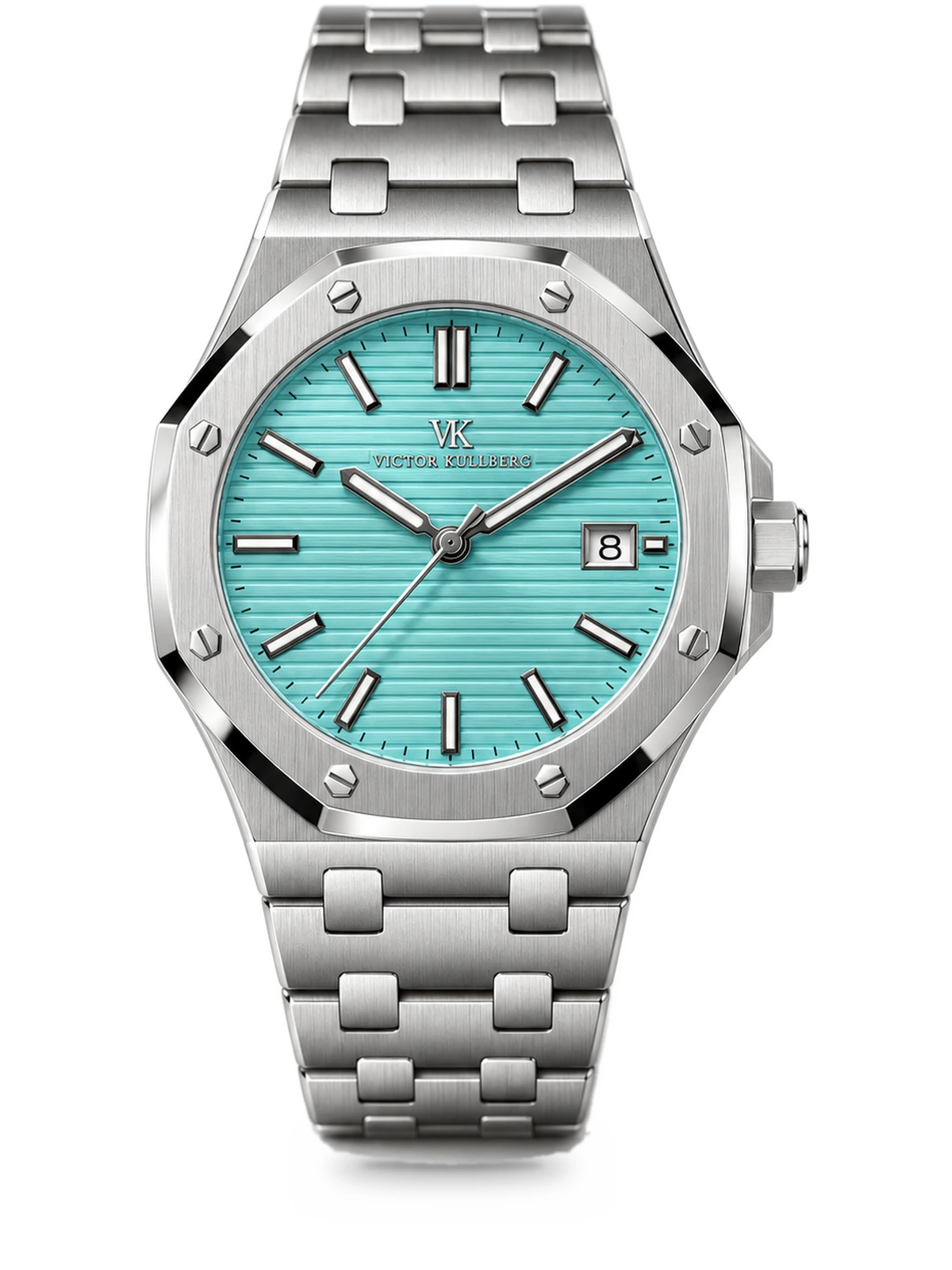
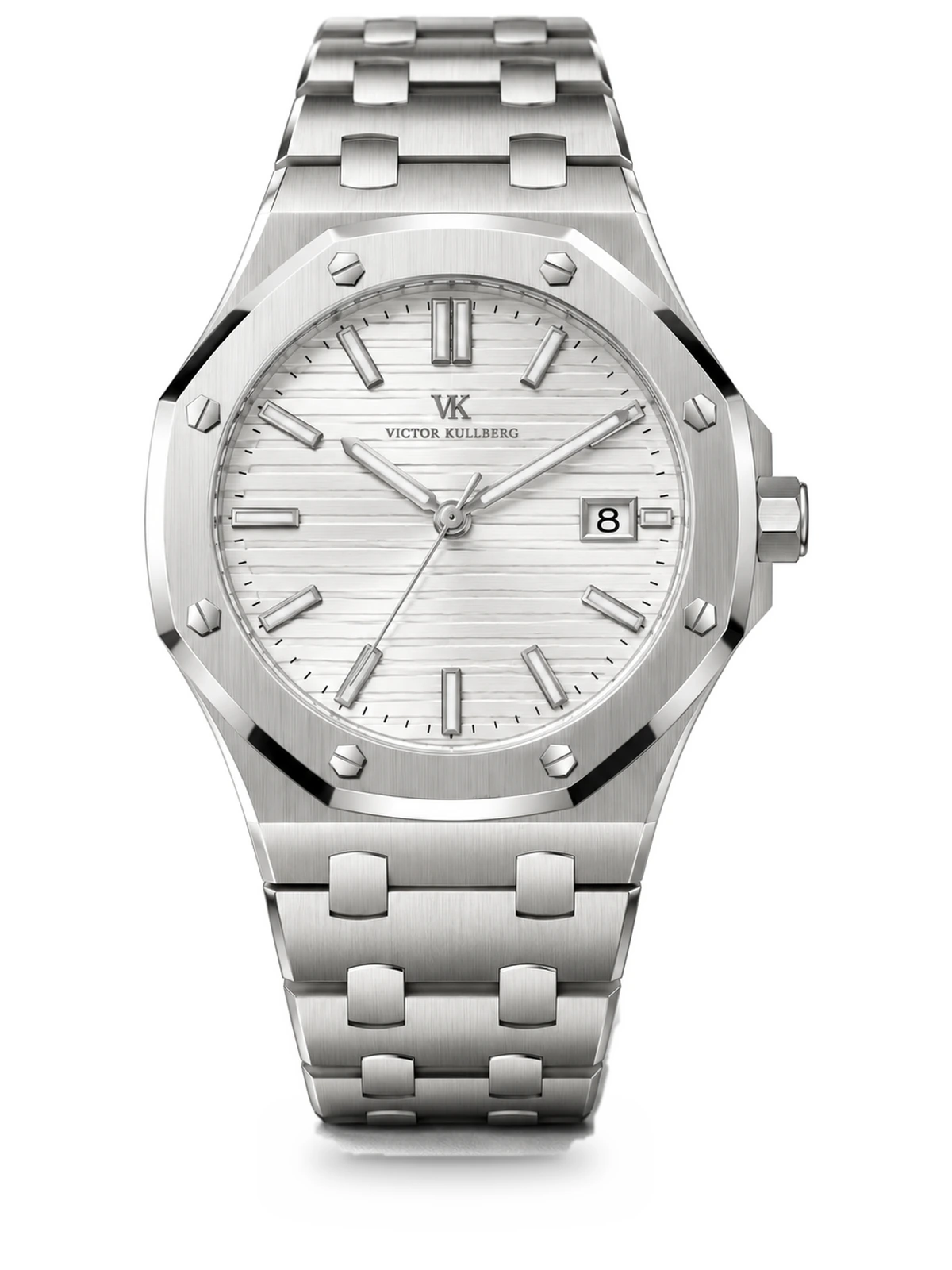
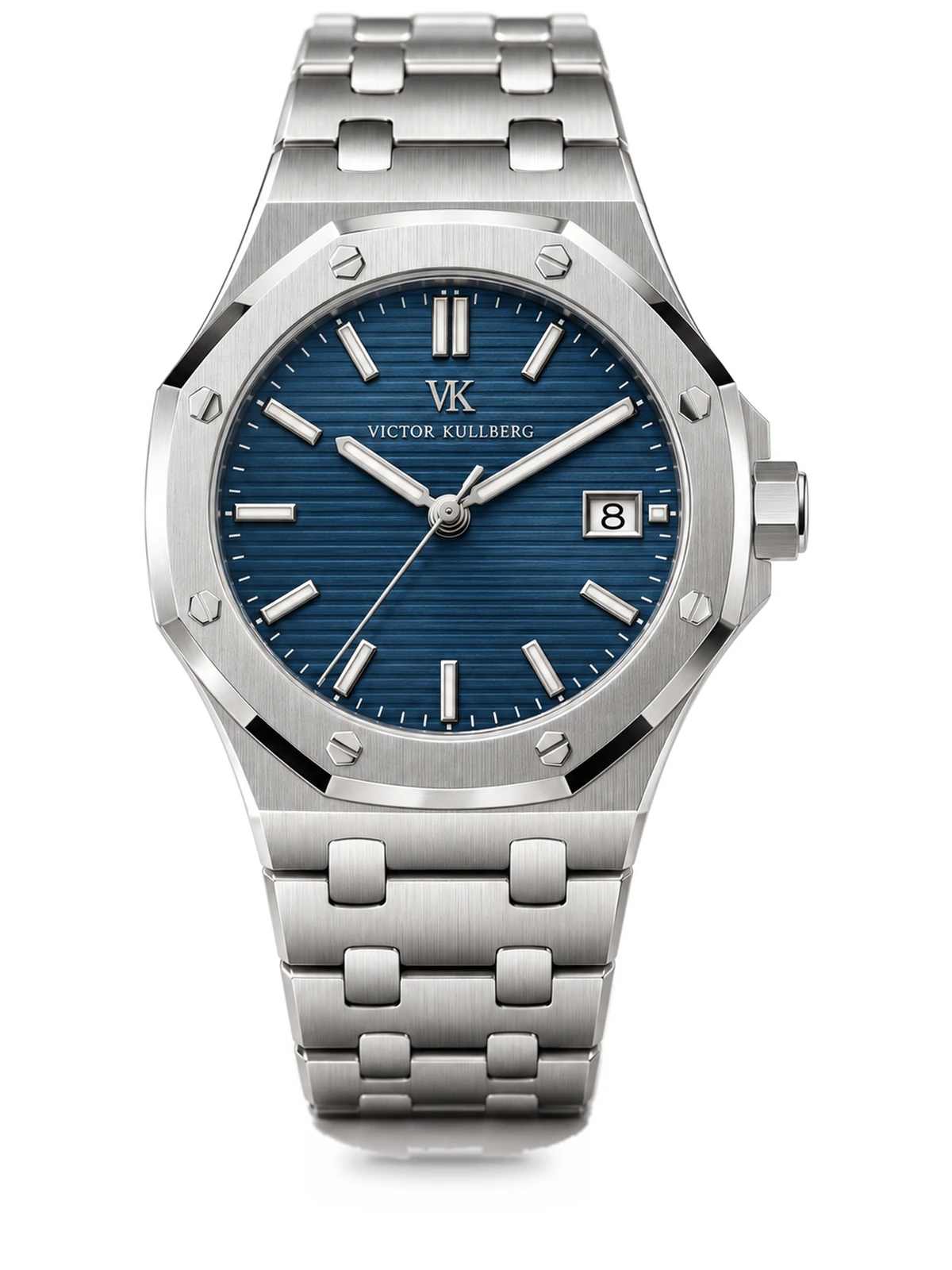
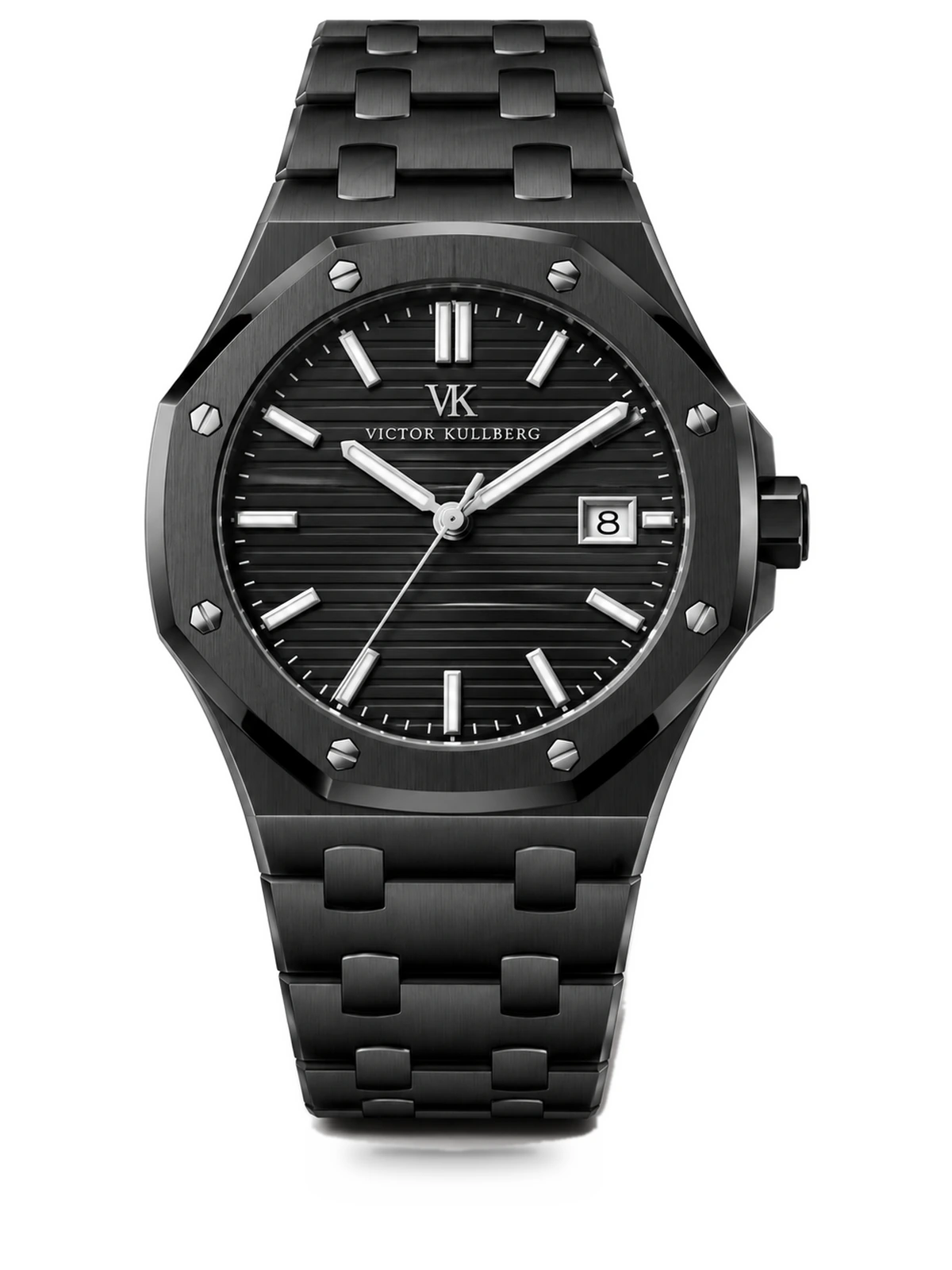
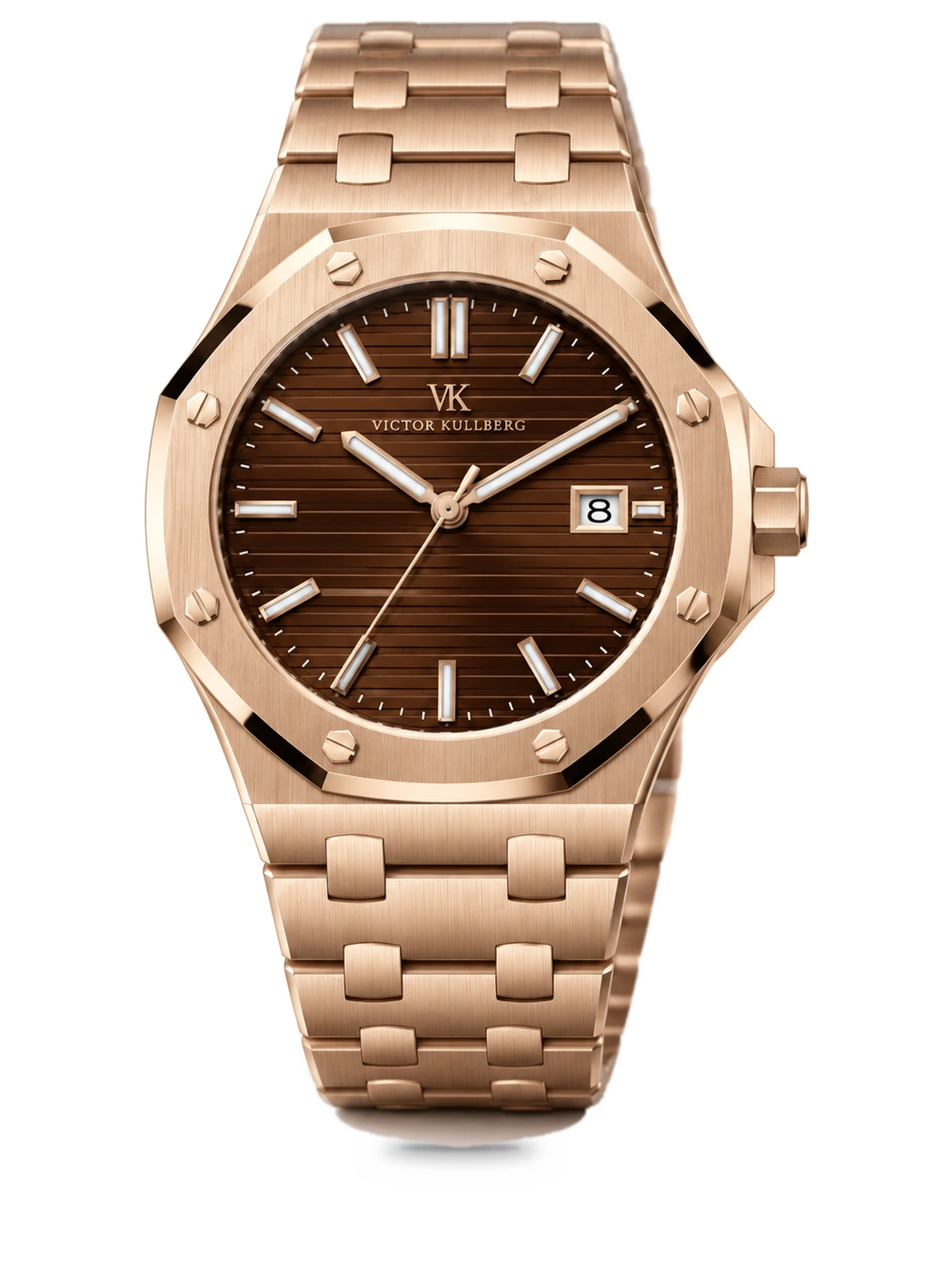
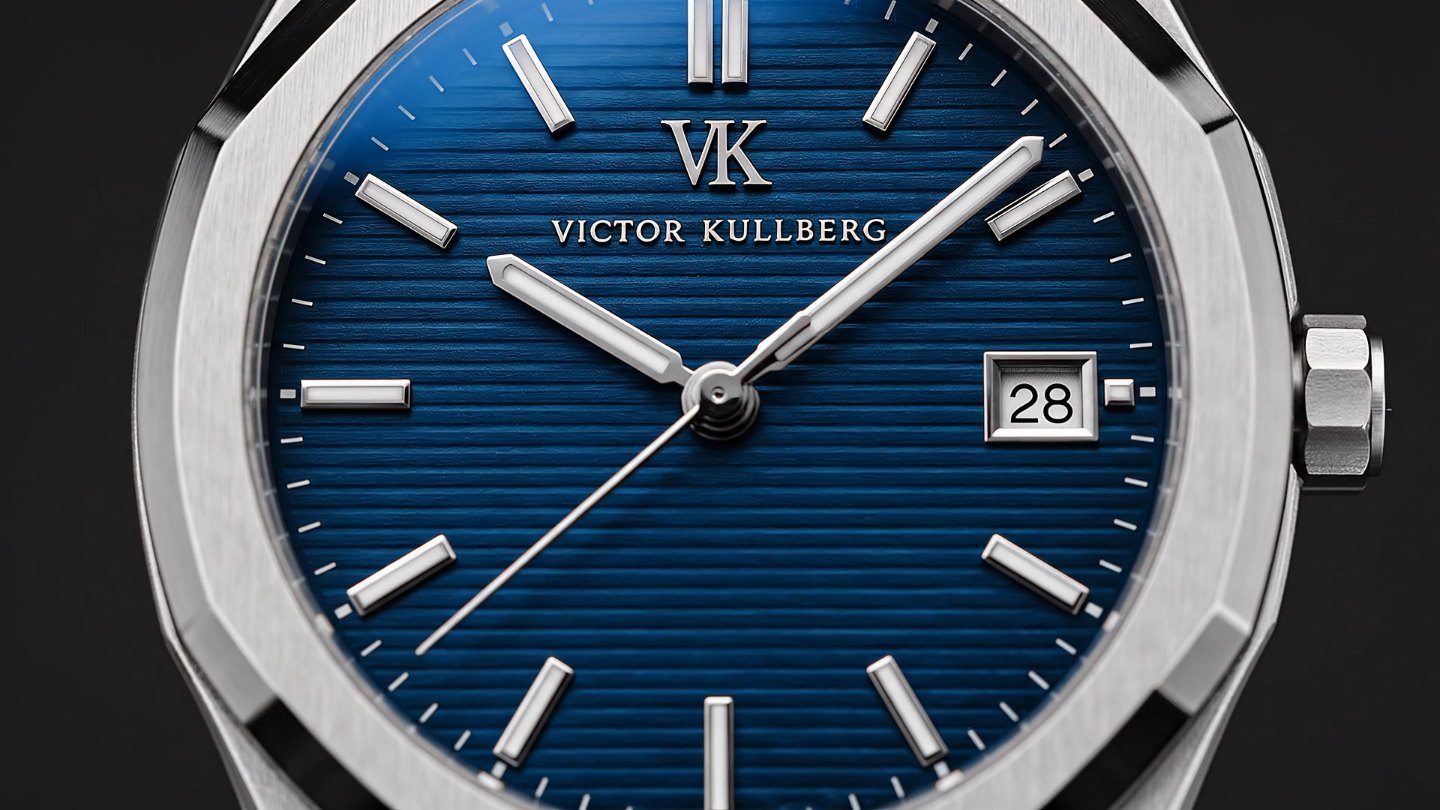
Applied indices, a framed date at three and a dial ribbed in horizontal lines that changes with the light. Brushed and polished steel meet at a single sharp edge around it.
Meridian in forest green
A forest green dial, ribbed in horizontal lines, under an eight-sided bezel held by eight screws. Steel case, drawn into its bracelet without a break.
Discover the collection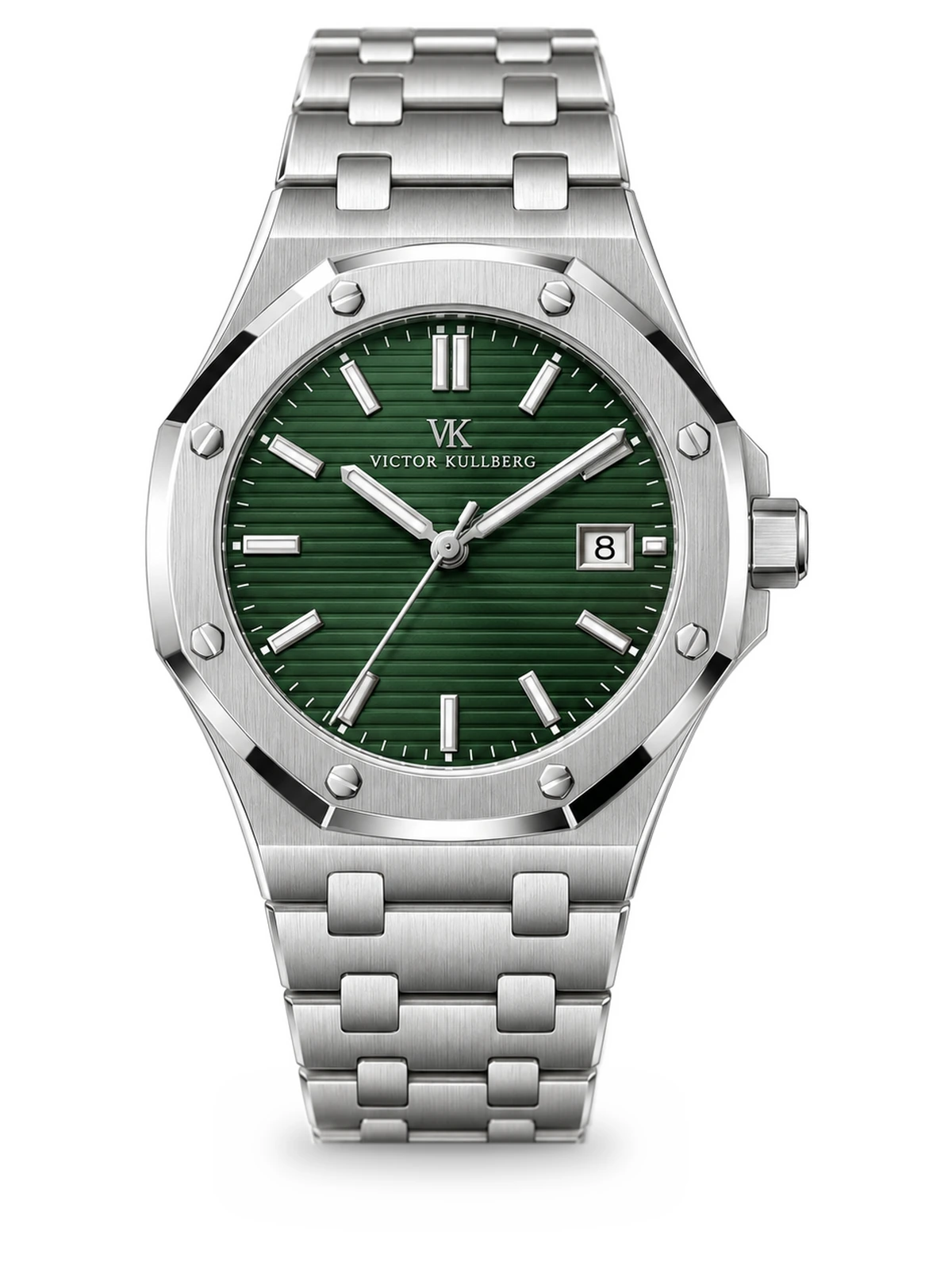
Twenty-four hours,
quietly kept
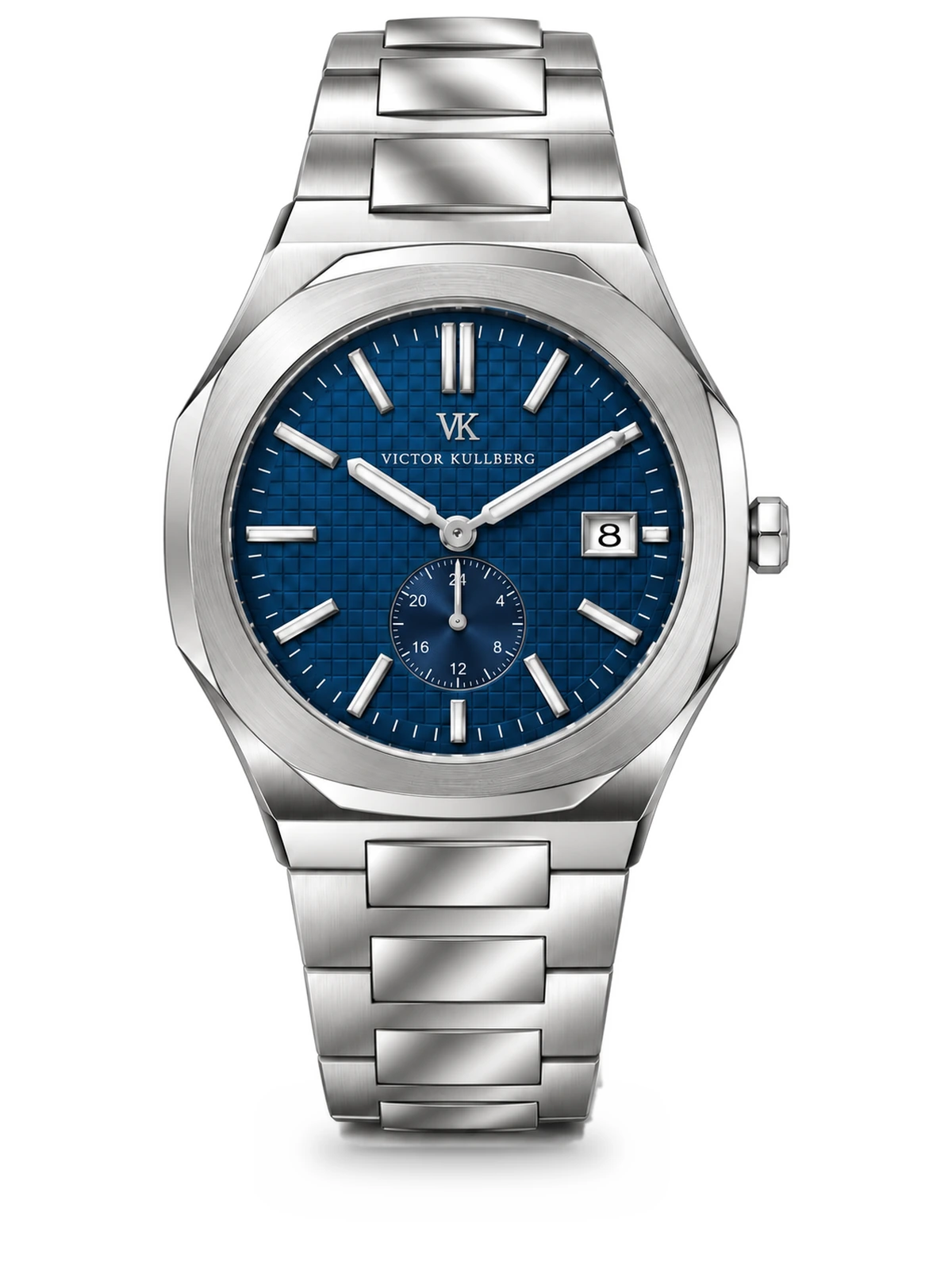
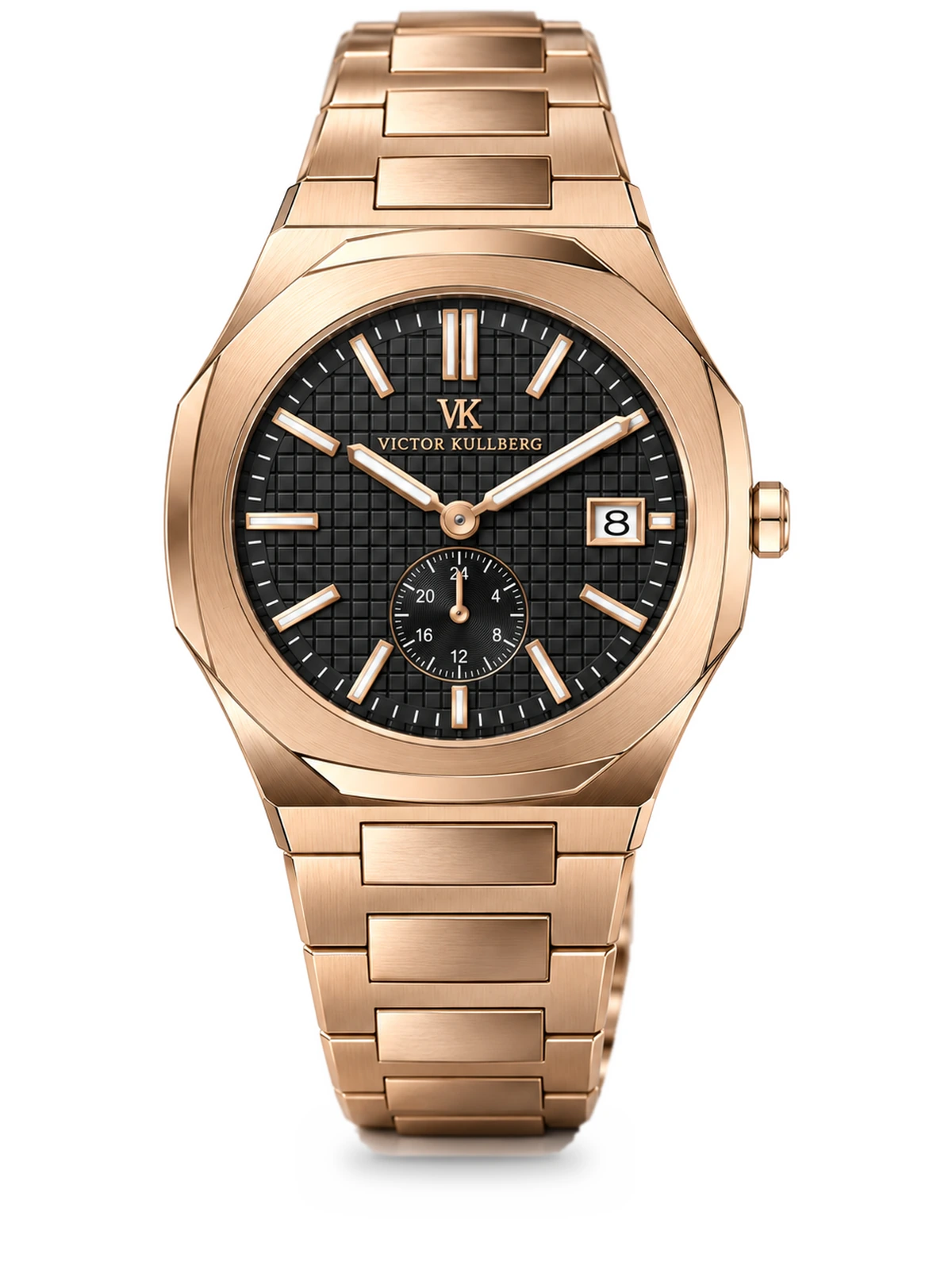
Solstice is the dress watch of the house: a softened octagonal case, a dial cut in a fine square grid, and a small register at six that follows the full twenty-four hours.
Discover the collection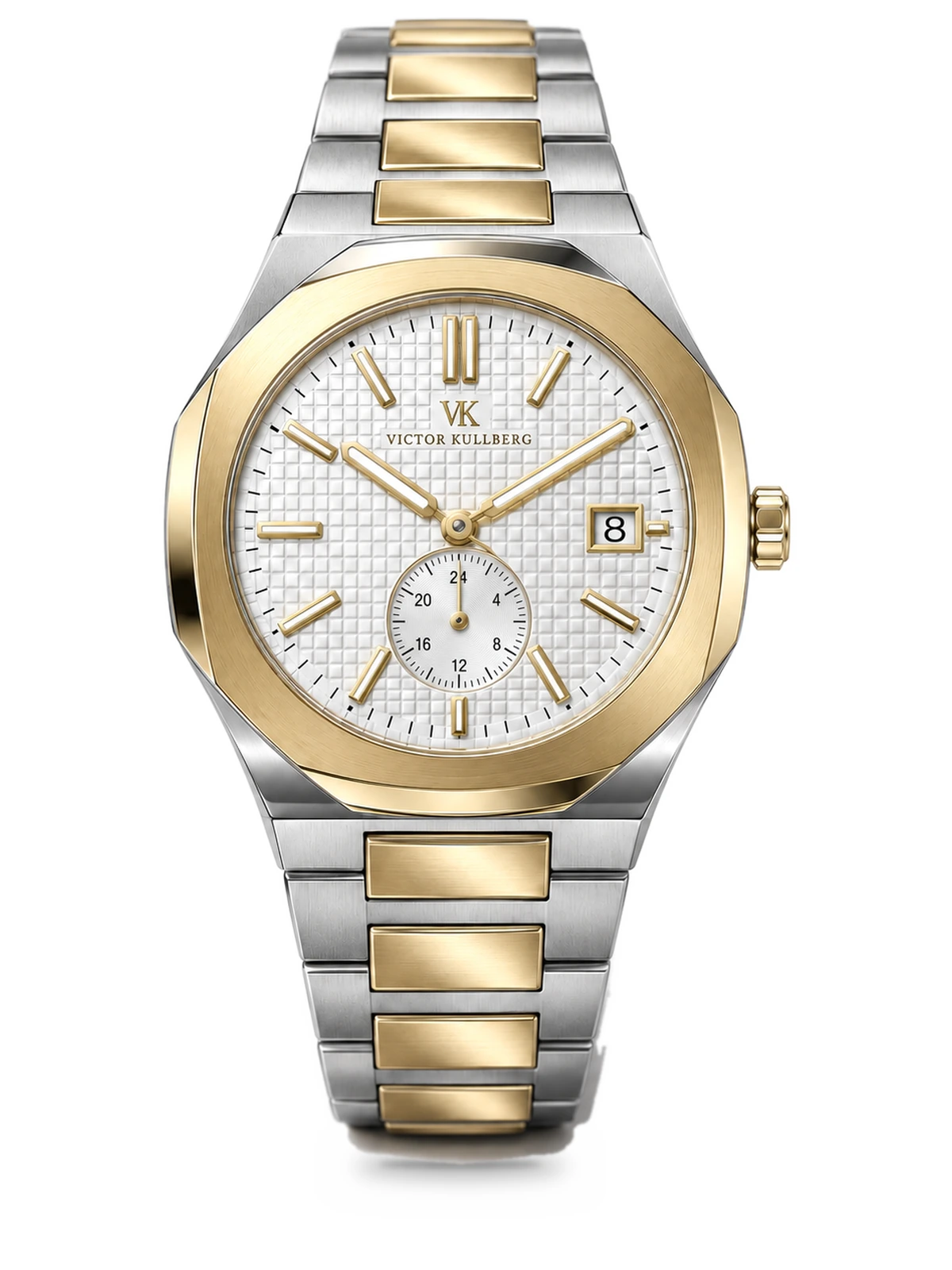
History
Victor Kullberg,
1824–1890
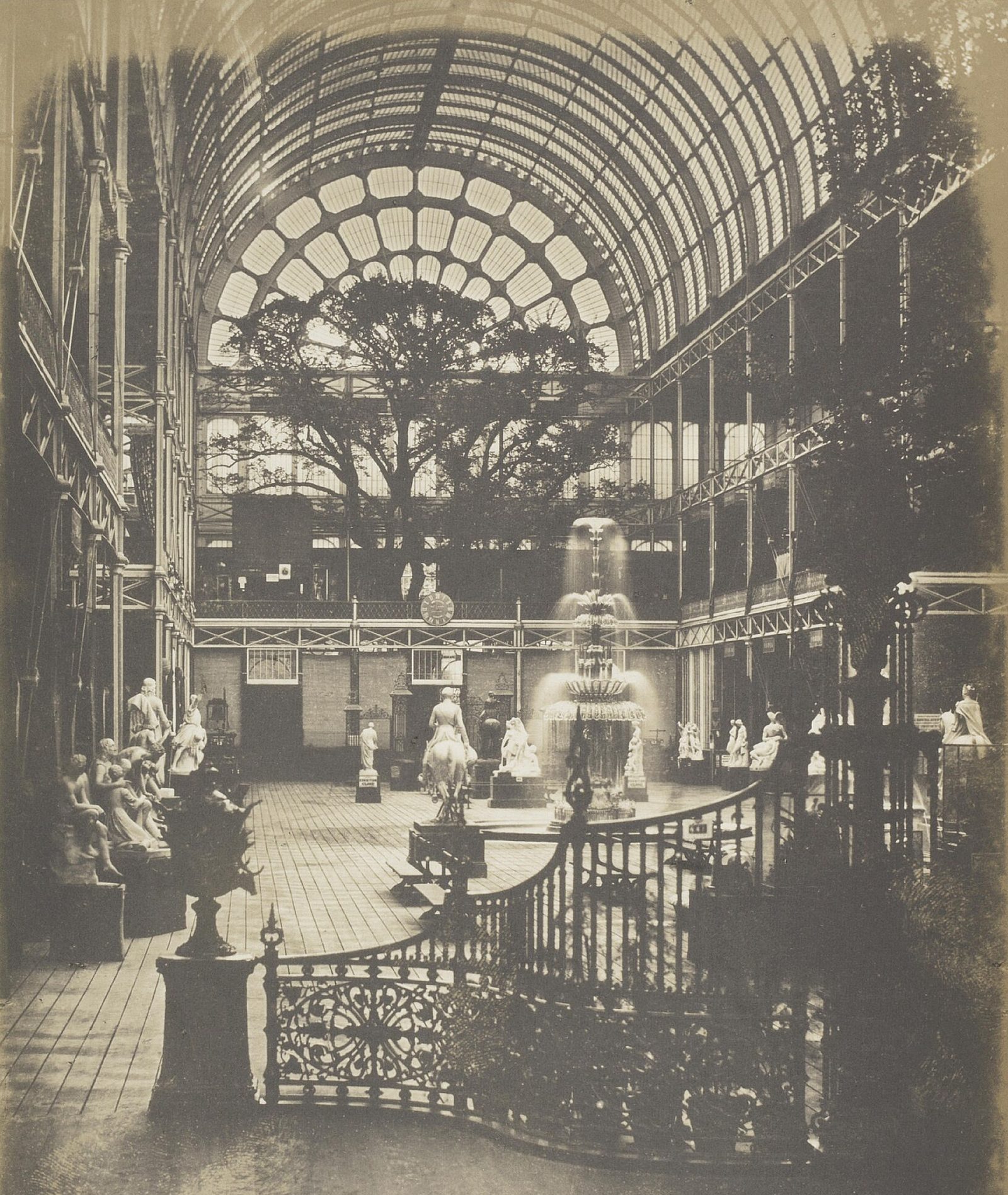
Born on the island of Gotland, he came to London in 1851 and became one of the most decorated chronometer makers of his century. His instruments were tested at Greenwich and carried by the Royal Navy.
- 1851
- Arrives in London
- 1864
- First place at Greenwich
- 500+
- Chronometers for the Royal Navy
Journal
News and stories
Three collections, fifteen dials
Meridian, Longitude and Solstice: what each watch is for, and how the dials were chosen.
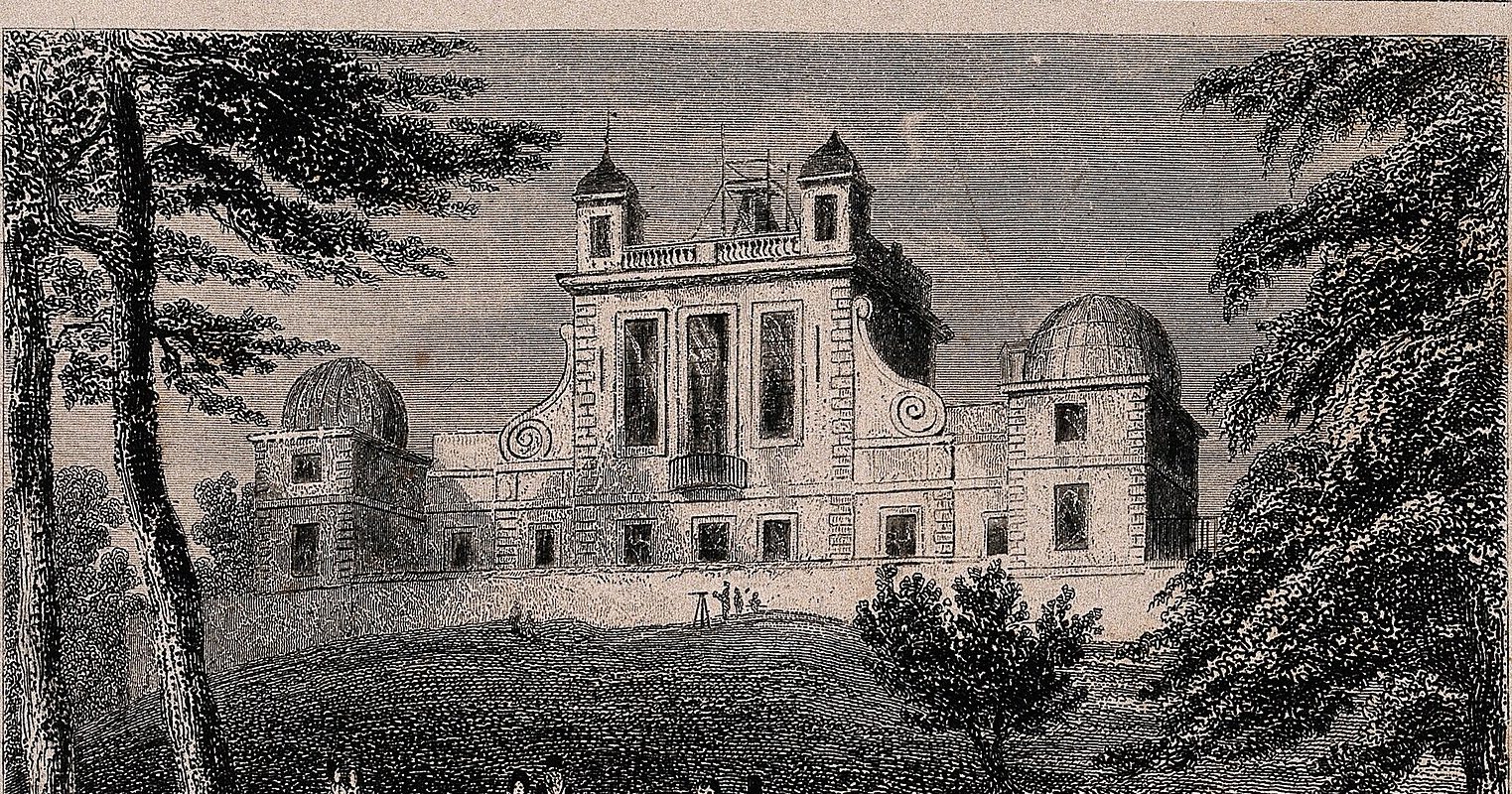
First place at Greenwich, 1864
How the Royal Observatory tested the chronometers that ships relied on, and how Victor Kullberg came out on top.
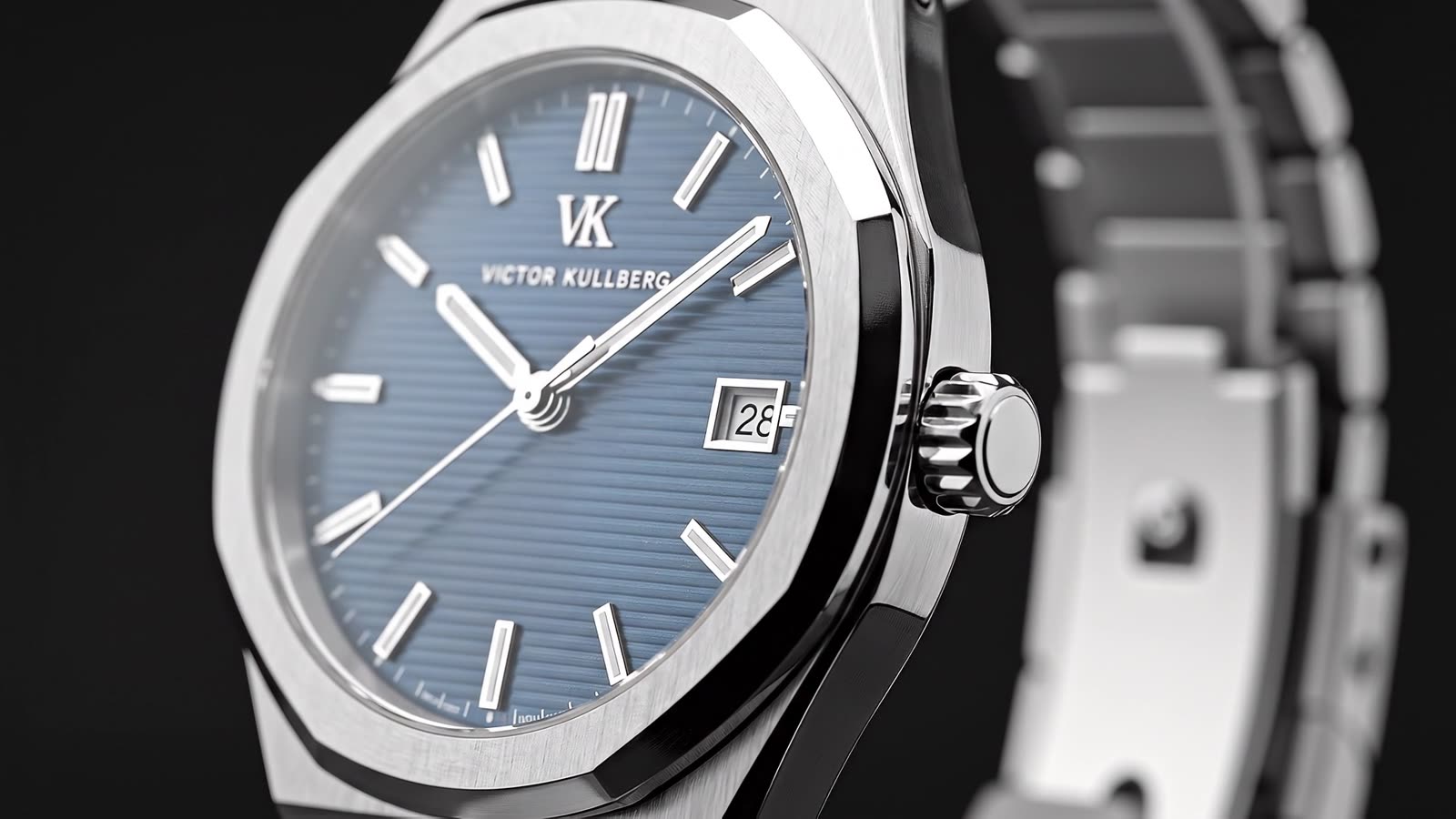
How a quartz watch keeps time
A sliver of crystal, a battery and a very small motor. What happens inside the case every second.
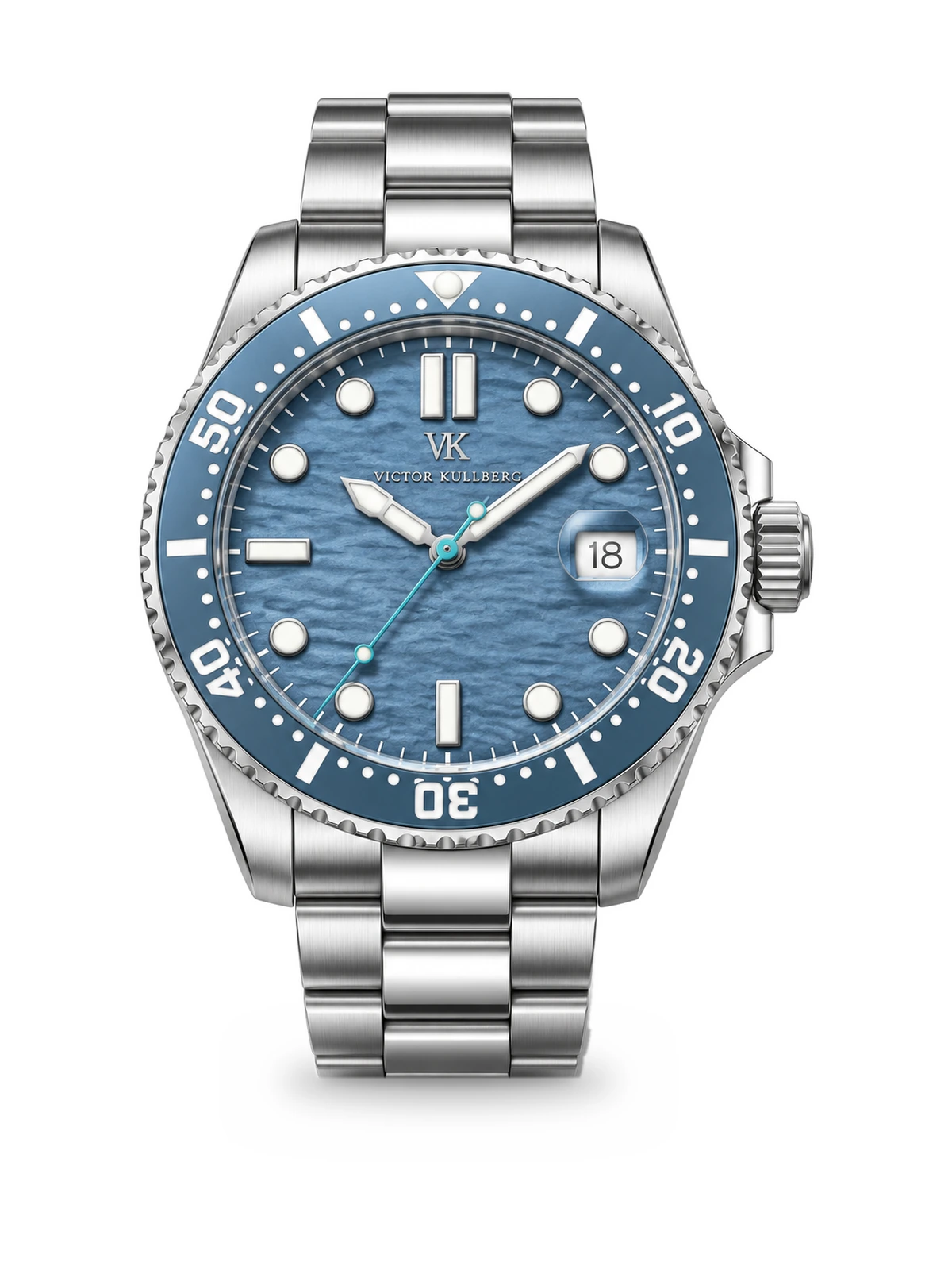
How to use a timing bezel
The ring around the Longitude dial is a stopwatch with no buttons. Here is how to read it.